IBJJF Masters Age Divisions: Complete Guide to Master 1-7 Categories
Everything you need to know about IBJJF masters divisions including age requirements, weight classes, match times, and tips for competing as a masters athlete.

Understanding IBJJF Masters Divisions
The International Brazilian Jiu-Jitsu Federation (IBJJF) recognizes that competitors over 30 deserve age-appropriate competition. The masters divisions provide a pathway for older athletes to compete against peers rather than 20-year-olds in their prime.
This guide covers all IBJJF masters age divisions, how they work, weight class considerations, and strategies for success as a masters competitor. For the full set of competition regulations, review our complete IBJJF rules guide.
IBJJF Masters Age Categories
The IBJJF divides masters competition into seven age categories:
| Division | Age Range | Age Requirement |
|---|---|---|
| Master 1 | 30-35 years | Must be 30 by competition day |
| Master 2 | 36-40 years | Must be 36 by competition day |
| Master 3 | 41-45 years | Must be 41 by competition day |
| Master 4 | 46-50 years | Must be 46 by competition day |
| Master 5 | 51-55 years | Must be 51 by competition day |
| Master 6 | 56-60 years | Must be 56 by competition day |
| Master 7 | 60+ years | Must be 60 by competition day |
How Age is Determined
Your age division is based on your age on the first day of the competition. If you turn 30 on day two of a three-day event, you compete as an adult on day one.
Warning: Your age division is determined by your age on the first day of the event, not your competition day. If you turn 30 during a multi-day tournament but your division competes on day one when you are still 29, you must compete in the adult division. Double-check the full event dates, not just your scheduled day.
Competing Up or Down in Age Divisions
Masters competitors have flexibility in which divisions they enter:
Competing Down (Younger Division)
You can always compete in a younger division:
- Master 3 can enter Master 2 or Master 1
- Any masters athlete can enter the adult division
- No special permission required
Competing Up (Older Division)
You cannot compete in an older division:
- A 35-year-old cannot enter Master 2
- Must meet minimum age requirement
- This prevents sandbagging
Strategic Considerations
Why compete down:
- Stronger competition
- Better preparation for major events
- More brackets/matches
- Challenge yourself
Why stay in your age division:
- Fair competition with peers
- Better chance at medals
- Age-appropriate match times
- Reduced injury risk
Pro Tip: If you are right at the border of an age division (for example, turning 36 soon), consider competing down in the younger division at local tournaments to prepare for tougher competition at major events. The experience against younger, more athletic opponents will sharpen your game.
Masters Weight Classes
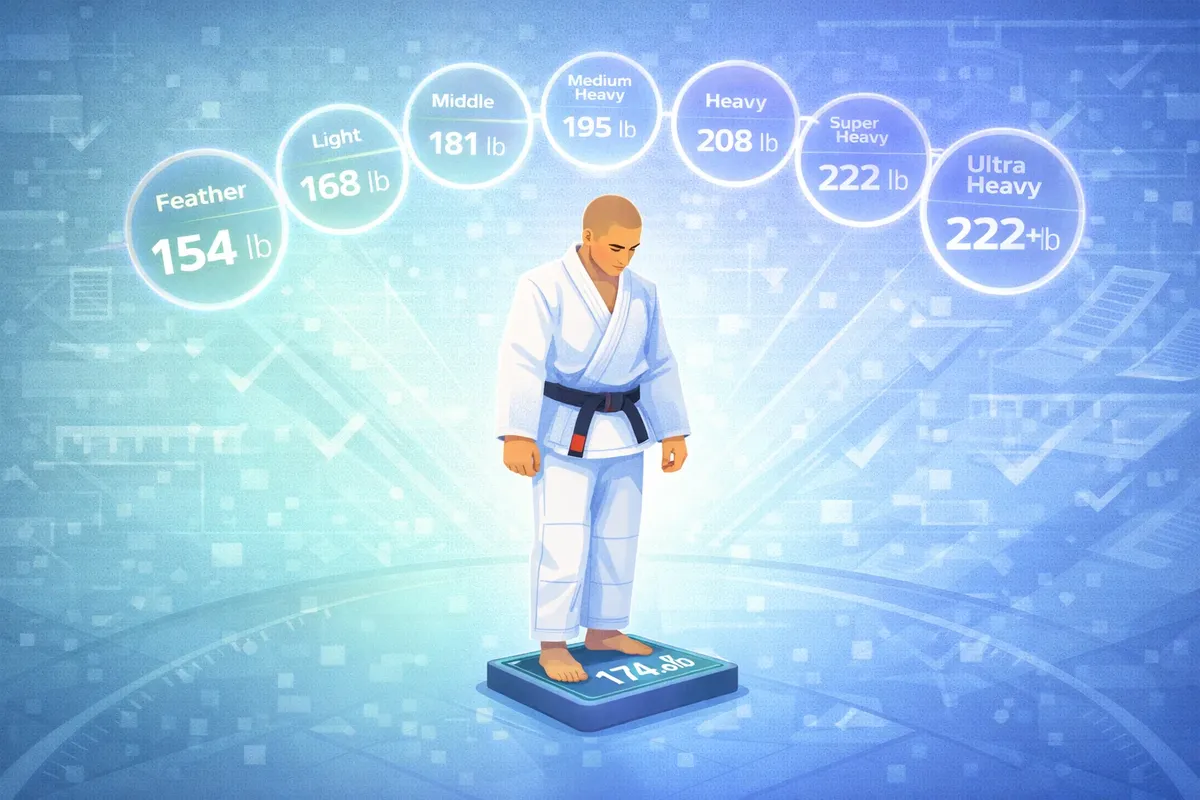
Masters divisions use the same weight classes as adult divisions. For a full breakdown including No-Gi weights and weigh-in tips, see the IBJJF weight classes complete guide:
Male Masters Gi Weight Classes
| Weight Class | Limit (kg) | Limit (lbs) |
|---|---|---|
| Rooster | 57.5 kg | 126.8 lbs |
| Light Feather | 64.0 kg | 141.1 lbs |
| Feather | 70.0 kg | 154.3 lbs |
| Light | 76.0 kg | 167.6 lbs |
| Middle | 82.3 kg | 181.4 lbs |
| Medium Heavy | 88.3 kg | 194.7 lbs |
| Heavy | 94.3 kg | 207.9 lbs |
| Super Heavy | 100.5 kg | 221.6 lbs |
| Ultra Heavy | No limit | No limit |
Female Masters Gi Weight Classes
| Weight Class | Limit (kg) | Limit (lbs) |
|---|---|---|
| Rooster | 48.5 kg | 106.9 lbs |
| Light Feather | 53.5 kg | 118.0 lbs |
| Feather | 58.5 kg | 129.0 lbs |
| Light | 64.0 kg | 141.1 lbs |
| Middle | 69.0 kg | 152.1 lbs |
| Medium Heavy | 74.0 kg | 163.1 lbs |
| Heavy | 79.3 kg | 174.8 lbs |
| Super Heavy | No limit | No limit |
Combined Weight Classes
At smaller events, adjacent weight classes may be combined:
- Rooster + Light Feather
- Super Heavy + Ultra Heavy
- Depends on registration numbers
Match Duration for Masters
Masters divisions have shorter match times than adult divisions:
Gi Match Times
| Division | White | Blue | Purple | Brown | Black |
|---|---|---|---|---|---|
| Master 1 | 5 min | 6 min | 6 min | 6 min | 6 min |
| Master 2 | 5 min | 5 min | 5 min | 5 min | 5 min |
| Master 3 | 5 min | 5 min | 5 min | 5 min | 5 min |
| Master 4+ | 5 min | 5 min | 5 min | 5 min | 5 min |
No-Gi Match Times
Similar structure with shortened times for older divisions. Always check specific event rules.
Why Shorter Times?
Shorter match times for masters recognize:
- Recovery needs increase with age
- Multiple matches in a day considerations
- Reduced cardio capacity for some
- Injury prevention
Did You Know: Master 2 and above have 5-minute matches across all belt levels, including black belt. This is the same duration as an adult white belt match. Shorter times mean every second counts -- you need to score early and avoid slow starts that were forgivable in longer matches.
IBJJF Master Worlds
The IBJJF World Master Jiu-Jitsu Championship (commonly called Master Worlds) is the premier event for masters competitors. Read our Master Worlds 2025 results and highlights for a look at recent champions and trends:
Event Details
- Typically held in Las Vegas
- Late August/early September
- All masters divisions compete
- Largest gathering of masters athletes
What Makes Master Worlds Special
- Dedicated event (not combined with adult worlds)
- Full brackets in most divisions
- International competition
- High-level competition
- Age-appropriate atmosphere
Registration Tips
- Opens months in advance
- Popular divisions fill up
- IBJJF membership required
- Early registration recommended
Masters Competition Strategy
Competing successfully as a masters athlete requires adjustments:
Physical Preparation
Maintaining mobility becomes even more important as you age. A dedicated BJJ stretching and mobility routine can help you stay competitive and injury-free.
Recovery Focus:
- Plan more rest days
- Quality sleep essential
- Active recovery important
- Don't overtrain before competition
Smart Training:
- Intensity management
- Injury prevention priority
- Technique over athleticism
- Position-specific sparring
Competition Day Strategy
Energy Management:
- Warm up thoroughly but conserve energy
- Stay calm between matches
- Shorter matches = faster pace possible
- Don't waste energy in warm-up area
Game Plan:
- Play your strongest positions
- Don't take unnecessary risks
- Submissions end matches quickly
- Top game often favors older competitors
Weight Considerations
For masters athletes, weight cutting requires extra caution:
- Recovery takes longer
- Dehydration affects older bodies more
- Consider competing at natural weight
- Performance matters more than weight class placement
Key Takeaway
Masters competition rewards efficiency over athleticism. With 5-minute matches, focus your training on having a clear, executable game plan: a reliable opening (takedown or guard pull), a strong passing or sweeping sequence, and 2-3 go-to submissions from your best positions. Simplify your game as you age.
Common Masters Division Questions
Can I Compete in Adult and Masters at the Same Event?
At some events, yes. You can register for both adult and your masters division if the schedule permits. Check specific event rules.
What If My Division Has No Competitors?
Small divisions may be:
- Combined with adjacent age groups
- Combined with adjacent weight classes
- Cancelled (with refund)
- Converted to exhibition matches
Do Masters Divisions Have Different Rules?
No, the rules are the same as adult divisions. Only match times differ. All belt-level technique restrictions apply.
Is Masters Competition Easier?
Not necessarily. Many masters competitors:
- Have decades of experience
- Trained their whole lives
- Are former high-level competitors
- Have nothing to prove and compete relaxed
Should I Wait Until I'm 30 to Compete?
No! Compete now in adult division. The experience will serve you well when you transition to masters.
Benefits of Masters Competition
Physical Benefits
- Motivation to stay fit
- Structured training goals
- Accountability for health
- Active lifestyle encouragement
Mental Benefits
- Community connection
- Goal achievement
- Continued learning
- Competition experience
Social Benefits
- Meet fellow practitioners
- Build friendships
- Share experiences
- Mentorship opportunities
Preparing for Your First Masters Tournament
Timeline
3+ Months Out:
- Increase training frequency
- Register for event
- Book travel if needed
- Get medical clearance
1 Month Out:
- Competition-specific training
- Weight management
- Verify Gi compliance
- Rest and recover
Week Of:
- Light training only
- Hydration focus
- Mental preparation
- Logistics finalized
What to Expect
- Check-in and weigh-in process
- Gi inspection
- Warm-up area
- Match announcement
- Competition area protocols
Training Partners for Masters
Finding appropriate training partners helps your competition prep:
Ideal Training Partners
- Other masters competitors
- Similar size and belt level
- Controlled intensity
- Focus on technique
Avoiding Injury
- Communicate limitations
- Tap early, tap often
- Skip live sparring when needed
- Position-specific rounds
Warning: Injury risk increases significantly with age. Do not skip your warm-up before competition, and never jump into a match cold. Masters competitors should warm up for 15-20 minutes with movement drills and light flow rolling before their first match, then stay active between rounds.
Long-Term Masters Journey
Masters competition can be a lifelong pursuit:
Belt Progression
Masters athletes can still:
- Earn promotions at any age
- Achieve black belt later in life
- Progress through the ranks
- Compete at each belt level
Competition Goals
- Local tournaments for experience
- Regional events for challenge
- Master Worlds for ultimate test
- Medals at any level are achievements
Official Sources
- IBJJF Books & Videos - Official age divisions and competition rules
- IBJJF Events Calendar - Master Worlds and masters division events
Track your masters competition journey with Rollbook. Log every training session, monitor your progress, and prepare for tournaments with detailed session tracking. Our app helps masters athletes train smarter and compete better. Start your free trial today.
Oss!