Solo BJJ Drills: 25 Exercises You Can Practice at Home
A comprehensive home training guide with 25 essential solo drills that improve your BJJ technique, movement, and conditioning without a training partner.
Why Solo Drilling Matters
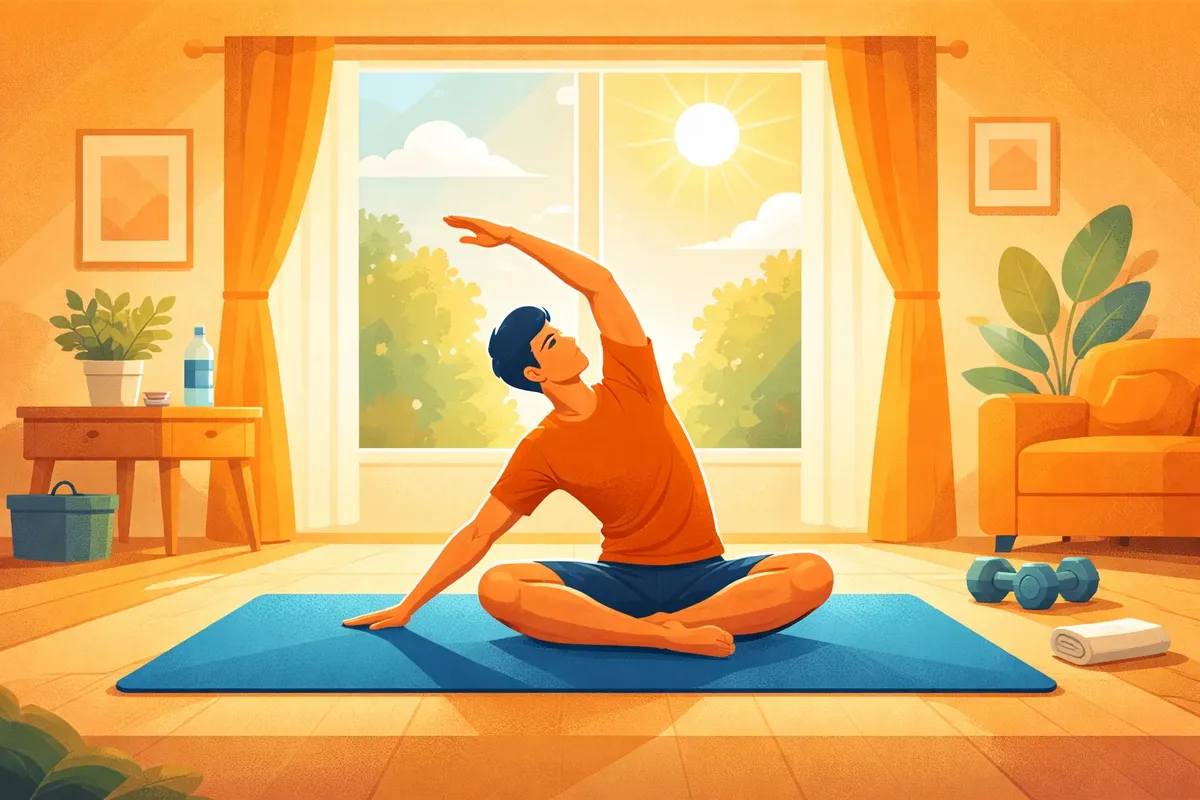
Not every day can be a mat day. Life gets in the way—travel, work, family obligations, or simply no classes available. But that doesn't mean your BJJ development has to stop.
Solo drilling bridges the gap between mat sessions. It improves your movement patterns, builds muscle memory, develops conditioning specific to grappling, and keeps your body primed for training. Many elite competitors credit significant portions of their success to consistent solo work. If you're new to the art, our complete beginner's guide covers the fundamentals these drills are built on.
This guide provides 25 essential solo drills organized by category, with clear instructions and recommendations for incorporating them into your training routine.
Did You Know: Studies on motor learning show that mental rehearsal combined with physical drilling can improve technique retention by up to 25%. Solo drilling gives your nervous system repetitions it craves, even without a partner providing resistance.
Essential Equipment
You can do most of these drills with minimal or no equipment:
Required:
- Open floor space (8x8 feet minimum)
- Comfortable clothing
Helpful:
- BJJ mat or yoga mat
- Grappling dummy (for some drills)
- Pull-up bar
- Timer or phone app
- Resistance bands
Optional:
- Wall space for wall drills
- Foam roller for recovery
- Mirror for form check
Pro Tip: A yoga mat on a hard floor works surprisingly well for most drills. If you find yourself slipping during shrimps, try wearing a rash guard — it grips the mat surface better than a cotton t-shirt and mimics gi friction.
Movement Drills (Foundation)
These fundamental movements are the building blocks of BJJ. Perfect them, and your entire game improves.
1. Basic Shrimp (Hip Escape)
The most important movement in BJJ. Used for escapes, guard recovery, and creating space.
How to perform:
- Lie on your back, knees bent, feet flat
- Bridge onto your shoulders and one foot
- Push off that foot, shooting your hips away at a 45-degree angle
- Land on your side with knees pulled toward chest
- Return to start position and repeat
Key Details:
- Drive with your foot, not just your hips
- Keep your elbows tight to protect from chokes
- Your head should move in the opposite direction from your hips
Volume: 3 sets of 20 each side
2. Reverse Shrimp
The complement to the basic shrimp—moving in the opposite direction.
How to perform:
- Start on your side in a fetal position
- Post your top elbow and top foot
- Push your hips backward, sliding on your shoulder
- End in a bridged position or return to start
Key Details:
- This movement is less common but equally important
- Used for certain guard recoveries and transitions
Volume: 3 sets of 15 each side
3. Technical Stand-Up
The safest way to stand up in a fight. Keeps you protected while rising.
How to perform:
- Start seated with one arm posting behind you
- Bring the foot on the posting-arm side forward
- Raise your hips, bringing your other foot under you
- Stand while keeping your posting hand ready to base
- End in a staggered stance
Key Details:
- Never put both hands on the ground
- Keep your eyes forward, not down
- Practice transitioning directly into wrestling stance
Volume: 3 sets of 15 each side
Understanding how to distribute your weight is the foundation that makes all of these movement drills effective. Whether you are shrimping, standing up, or transitioning, your base determines whether a technique works or fails.
Base & Weight Distribution
The ability to maintain balance and stability through proper weight placement. Good base means keeping your center of gravity low and your weight distributed so that you can move in any direction without being off-balanced. This concept underpins every drill in this guide — from shrimps to guard retention to escape movements.
Demonstrated by Bernardo Faria — multi-time IBJJF World Champion
Base and weight distribution fundamentals by Bernardo Faria — multi-time IBJJF World Champion
4. Granby Roll
An inversion used for guard retention and scramble situations.
How to perform:
- Start on your back
- Tuck your chin and roll over your shoulder (not your head)
- Bring your legs through, inverted
- Roll through to the other shoulder
- Finish facing the opposite direction
Key Details:
- Keep your chin tucked—never roll on your head
- Your legs should be active, kicking through
- Start slow; speed comes with comfort
Volume: 3 sets of 10 each direction
5. Sit-Throughs
A fundamental wrestling movement used for transitions and attacks.
How to perform:
- Start in quadruped position (hands and knees)
- Lift one hand and the opposite knee
- Thread that leg through, sitting through to the other side
- End with your hips on the ground, ready to return
- Return and repeat to the other side
Key Details:
- Keep your hips low as you thread through
- Your posting hand stays on the ground throughout
- Look in the direction you're threading
Volume: 3 sets of 20 alternating
6. Hip Switches
Rapid hip movement used in scrambles and transitions.
How to perform:
- Start in quadruped position
- Snap your hips to one side, sitting through
- Immediately snap back through to the other side
- Continue alternating rapidly
Key Details:
- Keep your hands posting throughout
- Speed and rhythm matter more than power
- Stay low to the ground
Volume: 3 sets of 30 seconds continuous
Key Takeaway
The six movement drills above are the absolute foundation of your solo practice. Shrimps, technical stand-ups, and sit-throughs should become as natural as walking. Prioritize smooth, correct form over speed — once the movement pattern is ingrained, adding speed is easy. Doing them wrong quickly just builds bad habits faster.
Track every roll — log sessions and techniques for free
Guard Retention Drills
Keeping your guard active and recovering when passed requires specific movements. One of the biggest challenges for beginners is developing confidence on their back. Before diving into the specific drills, watch this excellent breakdown on building comfort and control from bottom guard.
Guard Confidence Drill
A drill designed to build comfort and control when playing guard from your back. Focuses on maintaining active hips, managing distance, and using your legs as your primary tools for controlling an opponent's posture and movement. Essential for anyone who freezes up or panics when put on their back.
Demonstrated by Travis Stevens — Olympic Silver Medalist (Judo), BJJ Black Belt
Bottom guard confidence drill by Travis Stevens — Olympic Silver Medalist (Judo)
7. Leg Pummeling
Simulates fighting for inside position with your legs.
How to perform:
- Lie on your back with legs raised
- Imagine an opponent trying to control your legs
- Circle your legs, fighting for inside hooks
- Alternate which leg is on top/inside
Key Details:
- Keep your hips active, not flat on the mat
- Your knees should stay bent and ready to hook
- Vary speed—sometimes slow control, sometimes explosive
Volume: 3 sets of 1 minute continuous
8. Wall Guard Retention
Using a wall to simulate guard recovery pressure.
How to perform:
- Lie with your feet against a wall, hips close to the wall
- Push off the wall with your feet
- Shrimp away from the wall
- Return your feet to the wall and repeat
Key Details:
- The wall simulates an opponent's passing pressure
- Focus on keeping your feet active and replacing guard
- Vary the angle of your feet on the wall
Volume: 3 sets of 20 reps
Drill: Combine drills 7, 8, and 9 into a 5-minute guard retention flow: 30 seconds of leg pummeling, immediately into 10 wall guard retention reps, then 30 seconds of butt scoots. Rest 30 seconds and repeat. This simulates the constant adjustment and movement your guard requires during a live roll.
9. Butt Scoots
Seated movement for guard playing and distance management.
How to perform:
- Sit on the ground with legs in front
- Use your hands and hips to scoot backward
- Keep your legs ready to engage a "passing opponent"
- Practice scooting in all directions
Key Details:
- Don't drag—lift your hips to move
- Your legs should stay active, not flat
- Practice both forward and backward scooting
Volume: 3 sets of 1 minute continuous movement
10. Shoulder Walk
Movement for retaining back-lying position while remaining active.
How to perform:
- Lie on your back with knees bent
- Bridge onto your shoulders and walk in circles
- Keep your hips elevated throughout
- Change directions periodically
Key Details:
- Stay on your shoulders, not your head
- Keep your hips high throughout
- Use this when inverted in guard
Volume: 3 sets of 30 seconds each direction
Submission Finish Drills
Practice the finishing mechanics of submissions without a partner.
11. Triangle Hip Movement
The finishing hip mechanics of a triangle choke.
How to perform:
- Lie on your back, legs in triangle position
- Angle your body 45 degrees (as if finishing)
- Lift your hips toward the ceiling
- Squeeze your knees and pull your locking ankle
- Release and repeat
Key Details:
- The angle is crucial—practice it until automatic
- Your hip lift should be powerful but controlled
- Pull your head down (imagine pulling their head)
Volume: 3 sets of 15 each side
12. Armbar Hip Thrust
The finishing hip movement for armbars.
How to perform:
- Lie on your back with legs extended
- Squeeze your knees together (as if holding an arm)
- Thrust your hips up and toward your feet
- Hold for 2 seconds, then lower
Key Details:
- Keep your knees pinched throughout
- The thrust should be up AND forward
- Don't arch your back; thrust through your hips
Volume: 3 sets of 20 reps
13. Rear Naked Choke Finish
The squeezing mechanics of the RNC.
How to perform:
- Sit or stand with arms in RNC position (hand behind head)
- Squeeze your arms together, bringing elbow toward elbow
- Expand your chest and squeeze your back muscles
- Hold for 3 seconds, then release
Key Details:
- The squeeze comes from your back, not just arms
- Expand your chest as you squeeze
- Practice both palm-to-palm and traditional grips
Volume: 3 sets of 15 squeezes
Escape Drills
Practice the movements used in common escapes.
14. Trap and Roll (Mount Escape)
The upa movement for mount escapes.
How to perform:
- Lie on your back with knees bent
- Bridge explosively onto one shoulder
- Push your hips as high as possible while driving to one side
- Land on your side/stomach, then return
Key Details:
- The bridge should be explosive
- Drive up before turning over
- Practice the full roll to your stomach
Volume: 3 sets of 15 each side
15. Elbow-Knee Escape (Mount)
The shrimping escape from mount.
How to perform:
- Lie on your back
- Shrimp to one side
- Bring your knee and elbow together on that side
- "Insert" a hook (your foot would hook their leg)
- Return to start and repeat
Key Details:
- Elbow and knee should touch or nearly touch
- Your hook is creating the space to recover guard
- Chain multiple shrimps for full escape
Volume: 3 sets of 15 each side
16. Side Control Escape Movements
The hip escape sequence from side control.
How to perform:
- Lie on your back, imagine opponent in side control
- Frame with your arms (elbow in hip, hand on neck)
- Shrimp away, creating space
- Either insert a knee for guard or turn away for turtle
- Return and repeat
Key Details:
- Your frames prevent them from following your hips
- Multiple small shrimps are better than one big one
- Practice transitioning to guard after the shrimp
Volume: 3 sets of 10 complete sequences each side
The framing mentioned in drill #16 is one of the most underrated skills in BJJ. Good frames create the space that makes every escape possible, and understanding what makes a frame effective (and what breaks it down) will transform your entire defensive game.
Framing Concepts
Framing is the use of skeletal structure — bone against bone — to create and maintain space between you and your opponent. Effective frames use your forearms, elbows, and knees as barriers, requiring minimal energy while making it extremely difficult for your opponent to close distance. This video covers both how to build strong frames and how to recognize and defeat your opponent's frames (anti-framing).
Demonstrated by Bernardo Faria — multi-time IBJJF World Champion
Framing and anti-framing concepts by Bernardo Faria — multi-time IBJJF World Champion
Warning: When practicing escape drills solo, never sacrifice form for speed. A common mistake is rushing through the shrimp without actually creating space with your frames first. In a live roll, a shrimp without frames is just scooting away — your opponent will follow you effortlessly. Always rehearse the frame before the hip escape, even when drilling alone.
Key Takeaway
Escapes are the most important techniques you can drill solo. Unlike attacks that require reading your opponent's reactions, escape movements are largely mechanical — the same hip escape motion works whether your opponent weighs 150 or 250 pounds. Invest heavily in drills 14-16 and you will see immediate improvement in your ability to survive and recover during live rolls.
Conditioning Drills
BJJ-specific conditioning that complements technique work.
17. Sprawl and Shoot
Wrestling conditioning with takedown defense and offense.
How to perform:
- Start standing
- Sprawl (throw your legs back, hips to ground)
- Immediately spring back up
- Shoot forward (level change, penetration step)
- Return to standing and repeat
Key Details:
- Sprawls should be explosive with hips hitting the mat
- Shots should be level changes, not just diving forward
- Maintain a sustainable pace for the duration
Volume: 3 sets of 10 complete sequences
18. Breakfall to Technical Stand-Up
Getting up after being taken down.
How to perform:
- From standing, drop to a breakfall (side fall)
- Immediately execute technical stand-up
- Return to standing in fighting stance
- Repeat to the other side
Key Details:
- The breakfall should be controlled, not a crash
- Flow immediately into the stand-up
- End in a ready position every time
Volume: 3 sets of 20 alternating
19. Grappling Get-Ups
Full-body movement from lying to standing.
How to perform:
- Lie flat on your back
- Get to your feet as quickly as possible using any technique
- Return to lying position
- Repeat with different get-up methods
Key Details:
- Vary your methods: technical stand-up, sit-through, granby to stand
- Speed matters—this is conditioning
- Stay controlled despite the pace
Volume: 3 sets of 30 seconds max effort
20. Guard Sit-Ups
Core conditioning that mimics guard attacks.
How to perform:
- Lie on your back with legs in guard position
- Sit up explosively, reaching toward your feet
- Control back down (don't just drop)
- Repeat
Key Details:
- Keep your legs active in guard position throughout
- The sit-up should be explosive like attacking an armbar
- Control the negative; don't just collapse back
Volume: 3 sets of 15 reps
Partner-Optional Drills
These can be done with a dummy or adapted for solo work.
21. Guard Pass Movement (Shadow)
Practicing guard passing footwork without a partner.
How to perform:
- Stand as if facing guard
- Practice passing footwork: torreando steps, knee cut movements, X-pass steps
- Visualize opponent's reactions
- Chain multiple passes together
Key Details:
- Move with intention, not just randomly
- Practice specific passes you're working on
- Include hand movements as if gripping gi/body
Volume: 3 sets of 2-minute flow
22. Shadow Rolling
Flowing through positions without a partner.
How to perform:
- Start in a position (guard, side control, etc.)
- Move through transitions as if rolling
- Practice attacks, defenses, and transitions
- Maintain continuous movement
Key Details:
- Visualize a specific partner or scenario
- Include everything: passes, sweeps, submissions
- Move at rolling pace, not drill pace
Volume: 5-10 minutes continuous flow
23. Dummy Submissions (if available)
Practicing submission sequences on a grappling dummy.
How to perform:
- Set the dummy in position
- Practice full submission sequences
- Include the setup, control, and finish
- Reset and repeat
Key Details:
- Focus on form and details, not speed
- Practice your current problem techniques
- Include transitions between submissions
Volume: As needed for specific techniques
Recovery and Injury Prevention
24. Hip Circles
Hip mobility for guard play and injury prevention. For a complete flexibility and recovery program to complement these drills, see our BJJ stretches and mobility guide.
How to perform:
- On hands and knees or standing
- Circle your hip in large circles (knee draws big circles)
- Complete circles in both directions
- Keep core engaged throughout
Key Details:
- Make the circles as large as your mobility allows
- Move slowly and deliberately
- Do both directions
Volume: 2 sets of 20 each direction, each hip
25. Bridge Variations
Strengthening and mobilizing the spine.
How to perform:
- Basic bridge: lie on back, push hips to ceiling
- Wrestler's bridge: on head and feet (BE CAREFUL)
- One-leg bridge: standard bridge with one leg extended
- Hold each for time
Key Details:
- Start with basic bridges
- Only progress to wrestler's bridges with neck conditioning
- Focus on squeezing glutes, not overextending spine
Volume: 3 sets of 30-second holds
Building Your Solo Practice Routine
The 15-Minute Daily Routine
Perfect for busy days or as a warm-up supplement:
| Exercise | Sets x Reps | Time |
|---|---|---|
| Hip circles | 1 x 10 each | 2 min |
| Shrimps | 2 x 10 each side | 3 min |
| Technical stand-up | 2 x 10 each | 3 min |
| Sit-throughs | 2 x 20 | 3 min |
| Guard retention | 2 x 30 sec | 2 min |
| Triangle hips | 1 x 10 each | 2 min |
The 30-Minute Workout
A more comprehensive session:
| Exercise | Sets x Reps | Time |
|---|---|---|
| Hip circles | 2 x 15 each | 3 min |
| Shrimps | 3 x 15 each side | 5 min |
| Reverse shrimps | 2 x 10 each | 3 min |
| Technical stand-up | 3 x 12 each | 4 min |
| Granby rolls | 2 x 8 each | 3 min |
| Sit-throughs | 3 x 20 | 4 min |
| Shadow rolling | 1 x 5 min | 5 min |
| Submission finishes | 5 min | 5 min |
The 45-Minute Complete Session
For dedicated solo training days:
| Section | Time | Focus |
|---|---|---|
| Warm-up | 5 min | Hip circles, light movement |
| Movement drills | 15 min | Shrimps, technical stand-up, granby |
| Guard retention | 5 min | Leg pummel, wall retention |
| Escape drills | 5 min | Mount and side control escapes |
| Submission finishes | 5 min | Triangle, armbar, RNC |
| Conditioning | 5 min | Sprawl/shoot, get-ups |
| Shadow rolling | 5 min | Flow through positions |
Tracking Your Solo Training
Solo training often feels less "real" than mat time. Tracking makes it count:
What to Track:
- Which drills you did
- Duration or reps
- Quality observations (feeling smooth vs. rough)
- Any specific techniques you focused on
Review Questions:
- Are you maintaining consistency with solo work?
- Which movements need more attention?
- Is your solo work translating to mat performance?
- What new drills should you add?
Ready to track your complete training picture? Download Rollbook to log both mat sessions AND solo training. Our comprehensive tracking helps you see your full training volume and ensures your home workouts contribute to your BJJ development. Start your free trial today and never let a rest day go to waste.
Oss!