Guard Passing 101: Essential Techniques to Pass Any Guard
A systematic approach to guard passing covering both pressure and dynamic styles, with emphasis on fundamental concepts that work against all guard types at every level.
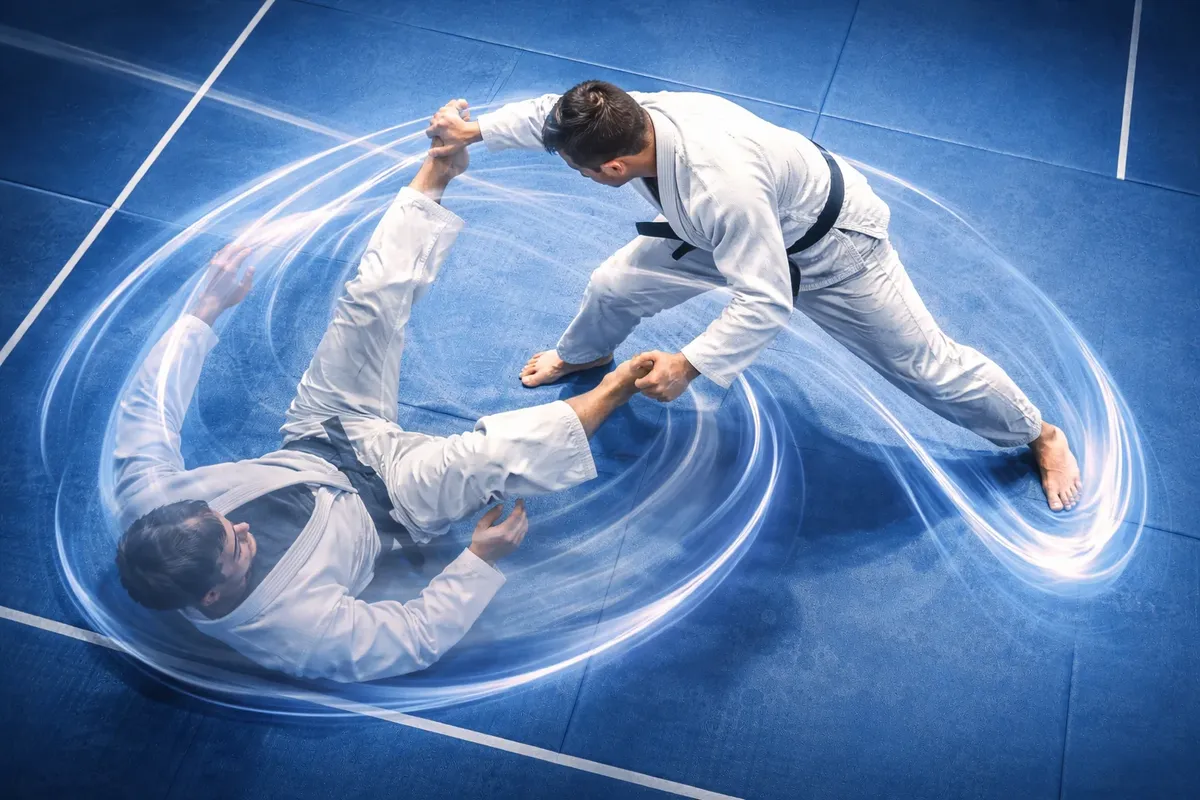
The Art of Getting Past the Legs
Guard passing is one of the most important—and most difficult—skills in Brazilian Jiu-Jitsu. It doesn't matter how devastating your submissions are from side control or mount if you can't get there. The guard is designed to stop you, frustrate you, and submit or sweep you—whether through a tight triangle choke or a well-timed sweep. Your job as a passer is to solve that puzzle.
This guide covers the fundamental concepts and techniques of guard passing. Whether you're facing closed guard, half guard, or the most creative open guards, these principles will help you get past the legs and into dominant positions. If you're just getting started on the mats, our complete beginner's guide to BJJ covers the foundational positions you'll need to understand first.
Passing Philosophy: Pressure vs. Speed
Before diving into specific techniques, understand that there are two fundamental approaches to passing:
Pressure Passing
Pressure passing involves using your body weight to slowly crush through the guard. You stay tight, move deliberately, and use your opponent's discomfort to create reactions you can exploit.
Characteristics:
- Slow, methodical movement
- Heavy hip pressure
- Chest-to-chest connection
- Low risk of being swept
- Grinding, exhausting style
Best For:
- Bigger, heavier practitioners
- Opponents with dangerous open guards
- Competition (points-oriented)
- Conserving energy
Speed/Dynamic Passing
Speed passing involves quick movements around the guard, using agility to get past the legs before your opponent can set up their defense.
Characteristics:
- Quick, explosive movement
- Light on your feet
- Changing angles rapidly
- Higher risk, higher reward
- Athletic, flowing style
Best For:
- Smaller, faster practitioners
- Opponents with tight closed guards
- Submission hunting
- When pressure passing stalls
The Complete Passer
Elite passers use both approaches. They read the situation and choose the appropriate style:
- Start with speed, switch to pressure when close
- Use pressure to create reactions, then speed past the opening
- Adapt to what the opponent gives you
Key Takeaway
The best guard passers are not one-dimensional. They blend pressure and speed, reading their opponent's reactions to choose the right approach in real time. Start by mastering one style, then layer in the other.
Passing Fundamentals: Universal Concepts
These concepts apply regardless of which guard you're facing or which passes you prefer:
1. Posture and Base
Before you can pass, you must not be swept or submitted. This requires:
Good Posture:
- Head up, shoulders back
- Spine neutral or slightly extended
- Weight distributed, not leaning too far forward
Solid Base:
- Wide stance for stability
- Ready to adjust when pushed or pulled
- Not easily off-balanced
2. Grip Fighting
The guard player wants grips; you want to deny them.
Priority Order:
- Don't let them get collar/sleeve grips (gi) or wrist/head control (no-gi)
- Strip grips immediately when established
- Establish your own controlling grips
- Use your grips to flatten them and pass
Common Passer Grips:
- Pants at the knee (gi)
- Collar grip for head control (gi)
- Wrist control (gi and no-gi)
- Underhooks (gi and no-gi)
3. Hip Control
The guard is played with the hips. Control their hips, and you control their guard.
Methods:
- Pinning hips to the mat with your arms
- Using your hips to block their hip movement
- Flattening them so their hips can't generate power
- Passing to the side their hips can't chase
4. Knee Line Principle
A simple but powerful concept: get your body past their knee line (an imaginary line across both knees), and you've essentially passed.
Implications:
- Many passes focus on driving one knee to the mat
- If both knees are on the mat and you're past them, you're passing
- Knee shields, butterfly hooks, and frames exist to prevent this
5. Inside Position
In passing, inside position generally means:
- Your arms/head inside their frames
- Your hips inside their leg attacks
- Your pressure directed toward their centerline
Think of it as "getting inside their house." Once you're inside, they have limited options.
Pro Tip: Before every passing attempt, run a quick mental checklist: posture intact, grips cleared, hips controlled. If any of these are missing, fix it before committing to the pass. Skipping this check is why most passes fail before they even start.
Essential Guard Passes
The Torreando (Bullfighter) Pass
Perhaps the most fundamental guard pass, effective against most open guards.
Setup:
- Stand in their open guard with good posture
- Grip both pant legs at the knee (gi) or control both ankles/knees (no-gi)
- Push both legs to one side in a circular motion
- Step around their legs to side control
Key Details:
- Move their legs in a circular motion, like swinging a bullfighter's cape
- As you move their legs, your hips move the opposite direction
- Pin their legs to the mat with downward pressure as you pass
- Immediately establish side control before they recover
Common Mistakes:
- Not controlling both legs equally
- Moving in straight lines instead of circles
- Not getting your hips past before establishing control
- Letting them re-guard before you consolidate
The Knee Cut (Knee Slice) Pass
A versatile pressure pass that works from many positions.
Setup:
- Establish combat base (one knee up, one knee down) inside their guard
- Control their bottom leg (stuff it between your legs)
- Wedge your front knee across their thigh
- Slide your knee across their thigh to the mat while driving your shoulder into them
- Consolidate side control
Key Details:
- Your cutting knee should slice across their thigh, not their stomach
- Drive your shoulder into their face/chest as you cut
- Control the far arm to prevent frames
- Your back leg kicks out as you complete the pass
Common Mistakes:
- Cutting too high (across stomach) allows them to recover
- Not controlling the bottom leg (they'll re-guard)
- Not driving pressure forward as you cut
- Leaving space for them to insert a knee shield
Knee Cut Pass
Ffion Davies teaches her signature crushing knee cut pass demonstrating the crossface pressure and hip mechanics.
Demonstrated by Ffion Davies — ADCC Champion, 4x No-Gi World Champion
Knee Cut Pass by Ffion Davies — ADCC Champion, 4x No-Gi World Champion
Warning: A common injury risk with the knee cut pass is torquing your own knee by cutting at a bad angle. Make sure your cutting knee tracks over your toes, not inward. If your knee feels any lateral pressure, reset your angle before committing.
The Over-Under Pass
A classic pressure pass for closed and half guard.
Setup:
- Open the closed guard (standing break or on-the-ground method)
- Immediately underhook one leg (your head-side arm goes under their leg)
- Overhook the other leg (your other arm goes over their leg, gripping the hip)
- Drop your shoulder into their hip and drive forward
- Walk around to side control, keeping heavy pressure
Key Details:
- Your underhook arm controls their leg by gripping your own collar or bicep
- Your overhook arm keeps them flat by pinning their hip
- Heavy shoulder pressure into their hip makes movement impossible
- Walk around in small steps, never giving space
Common Mistakes:
- Not staying tight (space allows them to recover)
- Rushing the pass (pressure passing requires patience)
- Not controlling their hips (they'll shrimp away)
- Forgetting to control the near arm when arriving at side control
The Leg Drag
A powerful pass that works in gi and no-gi.
Setup:
- From standing or combat base, grip one ankle
- Drag their leg across your body, placing their knee on the mat
- As their leg crosses, step to the opposite side
- Establish side control or back take
Key Details:
- You're dragging their leg across YOUR hip, not just moving it sideways
- As you drag, your hip comes forward to pin their leg
- The angle naturally gives you access to their back
- Keep their leg pinned until you've consolidated position
Common Mistakes:
- Not pinning their leg to the mat after the drag
- Losing control of the ankle/leg during the drag
- Not stepping around quickly enough after the drag
- Ignoring back take opportunities
Did You Know: Leandro Lo was widely regarded as one of the greatest guard passers in BJJ history. He won IBJJF World Championships across four different weight classes — an unprecedented achievement. His passing style seamlessly combined torreando, leg drags, and knee cuts into fluid chains that overwhelmed even elite guard players.
Leandro Lo Passing Study
BJJ Scout breaks down Leandro Lo's guard passing system, analyzing how he chains torreando, leg drags, and pressure passes into an unstoppable sequence.
Analysis by BJJ Scout — BJJ Scout Analysis
Leandro Lo Passing Study by BJJ Scout — BJJ Scout Analysis
The X-Pass
A quick, explosive pass against open guards.
Setup:
- Stand in their open guard with grips on their pants at the knee
- Step one foot between their legs to the far side
- Simultaneously push their legs to the opposite side
- Your stepping leg now blocks their hip recovery
- Establish side control
Key Details:
- The "X" is formed by your stepping leg crossing between their legs
- This pass is about speed and timing, not pressure
- Push their legs away as you step through
- Your stepping leg must get all the way past their hips
Common Mistakes:
- Being tentative with the step (commit fully or don't go)
- Not pushing their legs away as you step
- Stopping halfway (you're vulnerable until you're past)
- Not immediately consolidating after the pass
The Stack Pass
A powerful pass against flexible guard players, especially effective against triangles and armbars.
Setup:
- When they attack from guard, grip their belt or pants at the hips
- Drive forward, putting your weight on them
- Stack their hips over their shoulders
- Walk around to side control while keeping them stacked
Key Details:
- The stack is about putting your weight through your shoulder into their hips
- They should be folded nearly in half
- Walk in small steps, maintaining pressure
- Can be combined with many other passes as a finishing method
Common Mistakes:
- Not committing weight forward (half-stacks don't work)
- Letting them flatten out before you pass
- Stacking the shoulders instead of the hips
- Moving too fast and losing the stack
Passing Specific Guards
Closed Guard Passing
The closed guard must be opened before you can pass. Common opening methods:
Standing Break:
- Stand up in their guard with good posture
- Control their hips with your hands
- Push their hips to the mat while stepping back
- Their ankles will unlock; immediately address their legs
On-the-Ground Break:
- Posture up with your hands on their hips
- One knee up, other knee on the mat
- Push their knee/hip down while walking your hips back
- Strip their ankles open when they can't hold anymore
Once open, transition immediately to a passing sequence.
Half Guard Passing
Half guard requires freeing your trapped leg while preventing sweeps:
Knee Cut from Half: As described above, but with specific attention to:
- Flattening them with crossface/underhook
- Getting your knee above their bottom knee before cutting
Hip Switch Pass:
- Flatten them with shoulder pressure
- Back step your trapped leg free
- Immediately switch your hips to face them
- Slide to side control
Half Butterfly Guard Pass
Roger Gracie demonstrates his methodical approach to passing the half butterfly guard, emphasizing weight distribution and hip control that neutralizes the butterfly hook.
Demonstrated by Roger Gracie — 10x IBJJF World Champion
Half Butterfly Guard Pass by Roger Gracie — 10x IBJJF World Champion
Open Guard Passing
Open guards require identifying which guard they're playing and responding appropriately:
General Principles:
- Control at least one leg to prevent guard retention
- Don't dive forward into their guard (they want this)
- Use standing passes when possible
- Be prepared for leg attacks—see our comprehensive leg lock guide to recognize entries early
Common Passing Mistakes
Mistake 1: Rushing
The Problem: Trying to pass too quickly leads to poor positioning and easy recovery.
The Fix: "Slow is smooth, smooth is fast." Prioritize position and control.
Mistake 2: Leaning Too Far Forward
The Problem: Leaning puts your weight where they can use it against you.
The Fix: Keep your base under you. Move your hips forward, not just your head.
Mistake 3: Ignoring Grips
The Problem: Letting them establish grips before addressing them makes passing exponentially harder.
The Fix: Grip fight constantly. Strip their grips immediately.
Mistake 4: Predictable Patterns
The Problem: Always passing to the same side or using the same sequence is easily countered.
The Fix: Develop passes to both sides. Chain multiple passes together.
Mistake 5: Not Consolidating
The Problem: Getting past the legs but not establishing control allows guard recovery.
The Fix: The pass isn't finished until you have side control. Immediately establish position.
Mistake 6: No Plan B
The Problem: When your primary pass is defended, you reset and try again, losing momentum.
The Fix: Chain your passes. When A fails, you're already entering B.
Drill: Film yourself during guard passing rounds and count how many times you reset to neutral after a failed pass attempt. Elite passers chain 3-4 passes before resetting. Set a goal: never let a failed pass end your forward pressure — always have a Plan B ready.
Key Takeaway
Most guard passing failures come from a handful of recurring mistakes — rushing, ignoring grips, leaning forward, and resetting after every failed attempt. Fix these habits first and your pass completion rate will improve dramatically, regardless of which specific passes you use.
Guard Passing Chains
Elite passers chain passes together, using failed attempts to create new opportunities:
Example Chain 1: Torreando to Leg Drag
- Attempt torreando pass
- If they recover with one leg (keeping you out), grab that ankle
- Drag their leg across your body into the leg drag pass
Example Chain 2: Knee Cut to Stack
- Attempt knee cut pass
- If they frame and create distance, grab their pants/hips
- Stack them forward and walk around
Example Chain 3: X-Pass to Knee Cut
- Attempt X-pass
- If your stepping leg gets caught in half guard, immediately begin knee cut
- Use the momentum from the X-pass to drive through the knee cut
Drilling Guard Passes
Rep-Based Drilling
Pass Drill (No Resistance): Partner gives no resistance while you drill the pass sequence. Focus on form and fluidity.
- 20-30 reps per pass
- Both sides
Pass Drill (Light Resistance): Partner provides light resistance, allowing the pass but making you work for position.
- 10-20 reps per pass
- Both sides
Positional Sparring
Scenario 1: Guard vs. Pass
- Bottom starts in guard (closed, half, or open)
- Top tries to pass; bottom tries to sweep or submit
- 3-minute rounds, reset if pass or sweep
Scenario 2: Pass and Submit
- Start in open guard
- Passer must pass AND submit within time limit
- Forces urgency and combination play
Pro Tip: When drilling guard passes, always practice to both sides — even if one side feels awkward. In competition, opponents will force you to their strong side. Having a passing game that works left and right makes you unpredictable and far harder to defend against.
Competition Simulation
Full rolls where you specifically try to implement passing against all types of guards. Review afterward:
- What guards did you face?
- Which passes worked?
- Where did you get stuck?
Tracking Your Guard Passing
Guard passing involves many variables. Tracking your training data with a dedicated BJJ training app reveals patterns:
What to Track:
- Type of guard faced
- Pass attempted
- Result (passed, swept, submitted, stalemate)
- Which side you passed to
Review Questions:
- Which guards give you the most trouble?
- Which passes are you hitting most often?
- Are you passing evenly to both sides?
- Where in your passing sequences are you getting stuck?
Building Your Passing Game
Phase 1: Foundation (Months 1-3)
- Master one pressure pass (knee cut or over-under)
- Master one speed pass (torreando or leg drag)
- Drill until they're automatic
- Start using them in rolling
Phase 2: Expansion (Months 4-6)
- Add a second pressure pass
- Add a second speed pass
- Begin chaining passes together
- Start adapting to different guards
Phase 3: Integration (Months 7-12)
- Develop your personal passing style
- Build 3-4 pass chains
- Address specific problem guards
- Study elite passers for ideas
Ongoing Development
Guard passing never stops developing. New guards emerge, your body changes, and opponents adapt to your game. Continuous learning and deliberate practice are required. On days you can't make it to the gym, solo drills at home can help you refine your passing footwork and movement patterns.
Ready to develop a devastating passing game? Download Rollbook to track your passing attempts, identify which guards give you trouble, and see which passes work best for your game. Our detailed session logging helps you train deliberately and improve faster. Start your free trial today.
Oss!