Craig Jones and B-Team: The No-Gi System That Changed Grappling
A deep analysis of Craig Jones' signature techniques and the B-Team Jiu Jitsu training methodology that reshaped modern no-gi grappling, from octopus guard to devastating heel hooks.
The Grappler Who Refused to Play by the Rules
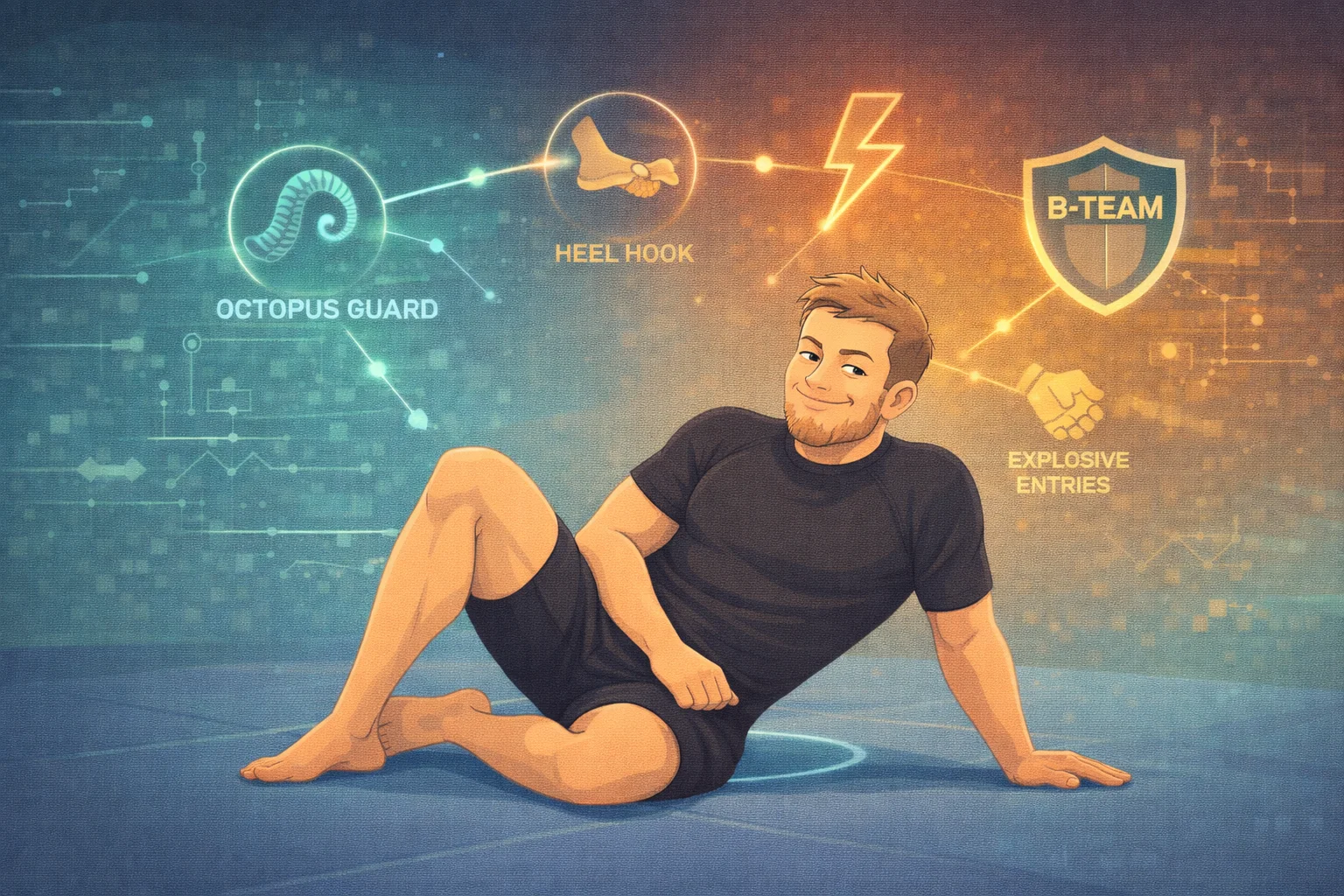
Few athletes have altered the trajectory of competitive grappling as decisively as Craig Jones. The Australian no-gi specialist went from relative obscurity to international stardom in a single ADCC tournament, submitting legends along the way. Then he left the most famous training squad in jiu-jitsu history, co-founded his own team in Austin, Texas, and built a system that continues to produce elite results.
Craig Jones matters because he represents something rare in combat sports: a competitor who is simultaneously an innovator, an educator, and a cultural force. His octopus guard, his 50/50 heel hook finishing mechanics, and his approach to pinning and back attacks have each become subjects of serious study. The training environment he helped create at B-Team Jiu Jitsu has become a model for a new generation of academies that prioritize systematic development and creative freedom over rigid tradition.
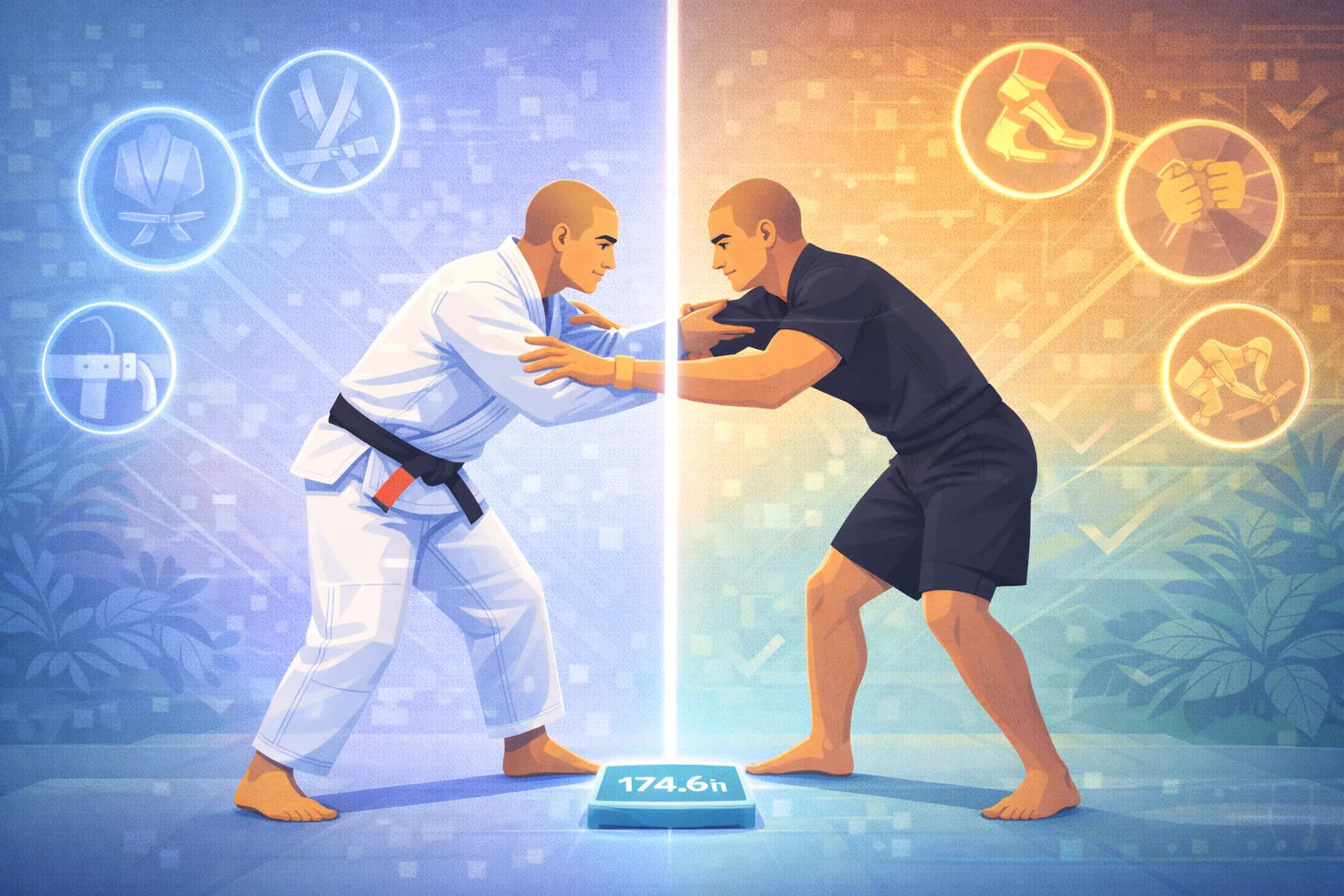
Whether you are a no-gi competitor looking to sharpen your leg lock game or a gi player curious about the techniques dominating submission-only competition, understanding Craig Jones' system gives you a window into where modern grappling is headed. For a broader look at the differences between the two training styles, our no-gi vs gi comparison is a useful starting point.
The Rise of Craig Jones
From Adelaide to the World Stage
Craig Jones began his jiu-jitsu journey in Adelaide, Australia, training at ISOHEALTH BJJ (his cousin's gym). He later relocated to Melbourne, where he trained at Absolute MMA under Lachlan Giles, who promoted him to black belt in 2016. His progression was remarkable even by the standards of full-time competitors. Jones moved from purple belt to elite black belt-level performances in roughly two years, a timeline that speaks to both his talent and the effectiveness of the systematic training approach he adopted early.
His breakout moment came at the 2017 ADCC World Championships. Jones entered the tournament as a relative unknown outside the Australian competition circuit and proceeded to shock the grappling world. He submitted the legendary Leandro Lo with a rear-naked choke, a moment that remains one of the most replayed sequences in ADCC history. At the same event, he caught Murilo Santana with a flying triangle, further cementing his reputation as a dangerous finisher. He went on to make deep runs through stacked brackets, establishing himself as a legitimate threat to anyone on the planet.
The Danaher Death Squad Era
After his 2017 ADCC performance, Jones joined the Danaher Death Squad (DDS) in New York, training alongside Gordon Ryan, Nicky Ryan, and Garry Tonon under the instruction of John Danaher. The DDS was the most dominant competition team in no-gi grappling, and immersion in that environment refined Jones' already dangerous leg lock and back attack game.
During this period, Jones absorbed Danaher's systematic approach to jiu-jitsu. The emphasis on positional hierarchies, dilemma-based attacks, and organized drilling aligned with his own instincts. He competed extensively in Eddie Bravo Invitational (EBI) events, reaching the EBI Absolute final where he submitted multiple opponents via inside sankaku heel hook and reportedly came within seconds of armbarring Gordon Ryan.
Did You Know: At the EBI Absolute Championship, Craig Jones submitted multiple opponents on his way to the final using the inside sankaku heel hook. In the final against Gordon Ryan, he reportedly locked up a deep armbar that Ryan barely escaped. It remains one of the most competitive finals in EBI history.
Co-Founding B-Team Jiu Jitsu
In 2021, Jones and several other high-profile athletes departed the Danaher Death Squad to co-found B-Team Jiu Jitsu in Austin, Texas. The split was one of the most talked-about events in recent grappling history, and it resulted in the creation of two separate powerhouse teams: New Wave Jiu-Jitsu (led by Danaher) and B-Team.
B-Team quickly established its own identity. While the technical DNA of the Danaher system remained visible, the culture was different. Jones and his training partners built an environment defined by accessible coaching, creative experimentation, and a deliberate rejection of the intense pressure that can characterize elite-level camps. The results spoke for themselves: B-Team athletes continued to medal at ADCC, win major sub-only events, and produce viral instructional content.
The Octopus Guard System
The octopus guard, sometimes called the "reach around" in Craig Jones' typically irreverent style, is one of his most distinctive contributions to modern grappling. It is a bottom position that combines elements of half guard, butterfly guard, and traditional underhook work into a system designed to generate sweeps, back takes, and entries into leg entanglements.
How the Octopus Guard Works
The octopus guard operates from a seated or semi-seated position where Jones secures a deep underhook on one side while his legs establish coverage over the opponent's near ankle and shin. This ankle and shin coverage is the critical detail that separates the octopus guard from a standard underhook half guard position. By controlling the opponent's ability to lift their knee or step over, Jones eliminates the most common passing responses to underhook-based guards.
From this position, Jones uses hip bumps to off-balance his opponent. The opponent faces a dilemma: resist the sweep and expose themselves to back takes, or base out and open pathways to leg entanglements. This is the hallmark of a well-designed guard system. It does not rely on a single technique working; it creates a series of branching decisions where every defensive choice by the opponent opens a new avenue of attack.
Octopus Guard (Reach Around Guard)
A hybrid guard position featuring a deep underhook combined with ankle and shin coverage on the near leg. The guard creates a dilemma-based system: hip bumps threaten sweeps to mount, which open back takes when the opponent posts; and any retreat exposes entries into single leg X and saddle positions for leg attacks. The key detail is controlling the opponent's knee line to prevent common passing counters.
Demonstrated by Craig Jones
Craig Jones breaks down the octopus guard system during a seminar at Bangtao BJJ, covering the fundamental grips, sweeps, and transitions that make this position so effective.
Key Principles of the Octopus Guard
1. Bait the Dominant Position One of the counterintuitive elements of Jones' guard system is his willingness to let opponents feel like they are winning. He allows the top player to establish what appears to be a strong position, then exploits the openings their confidence creates. This baiting philosophy is visible throughout his game, not just in the octopus guard.
2. Ankle and Shin Coverage The shin coverage prevents the opponent from lifting their knee to step over or establish crossface pressure. Without the ability to elevate the knee, the top player's passing options narrow significantly.
3. Hip Bump Cascades Rather than committing to a single sweep attempt, Jones chains hip bumps in sequence. Each bump forces a reaction, and the cumulative effect creates the space and angles he needs to transition to his strongest attacking positions.
Track every roll — log sessions and techniques for free
The Art of Pinning: Craig Jones' Top Game
While Craig Jones is best known for his bottom game and submissions, his approach to top pressure and pinning is equally sophisticated. His pinning methodology emphasizes maintaining heavy, suffocating top control that forces opponents into defensive positions where they become vulnerable to submissions.
Shoulder Pressure and Weight Distribution
Jones' pinning game relies on precise weight distribution rather than raw strength. He focuses on concentrating his weight through his shoulder into the opponent's jaw and neck, creating discomfort that forces reactions. When the bottom player moves to alleviate pressure, Jones transitions to the next attack.
B-Team Pinning System
A top-pressure methodology that emphasizes shoulder-of-justice crossface pressure, hip switching between side control and mount, and systematic elbow-knee connections that eliminate the bottom player's framing options. The system creates submission opportunities by forcing defensive reactions rather than chasing finishes from neutral positions.
Demonstrated by Craig Jones
Craig Jones teaches the art of pinning in this seminar, demonstrating how proper weight distribution and crossface pressure create openings for arm triangles and back takes.
Pinning to Submission Chains
The purpose of Jones' pinning is never merely to hold the position. Every moment of top pressure is designed to funnel the opponent toward a specific set of submission options. When the bottom player turns away from the crossface, they expose the back. When they frame against the shoulder pressure, they create space for arm triangles. When they bridge, they open leg entanglements. The pinning game is the setup; the submission is the payoff.
Leg Lock Mastery: The 50/50 and Beyond
Craig Jones' leg lock game is perhaps his most studied attribute. Nearly half of his competition submission victories come from heel hooks, a statistic that places him among the most effective leg lockers in the history of the sport. For foundational knowledge on how these attacks work, our comprehensive leg lock guide covers the mechanics and positions in detail.
The Inside Heel Hook from Saddle
Jones' primary leg lock weapon is the inside heel hook, typically entered from the saddle (also known as inside sankaku or honeyhole). His entries into the saddle are unusually diverse. He reaches this position from single leg X guard, from butterfly guard sweeps, from failed back take attempts by his opponents, and from standing exchanges where he elevates the opponent and slides underneath.
The common thread in all his entries is control of the knee line. Jones does not grab a heel and hope. He first secures positional dominance over the opponent's knee, ensuring that the leg cannot be extracted, and only then attacks the heel. This patience and positional discipline is a direct inheritance from the Danaher system, and it is what separates his leg attacks from the wild heel hook attempts you see at local tournaments.
Safety First: Heel hooks can cause catastrophic knee injury with minimal pain warning. If you are training these techniques, always practice with controlled partners, tap early, and never crank on a training partner's knee. Read our heel hook defense guide to understand proper escape mechanics and when to tap.
Inside Heel Hook from Saddle
Craig Jones' highest-percentage submission. Enter the saddle position by controlling the opponent's far knee with a triangle lock of your legs. Secure the heel grip with the blade of your wrist behind the heel bone. Finish by rotating the heel toward the opponent's hip while your legs prevent any knee extraction. The key detail is full control of the knee line before initiating any rotational force on the heel.
Demonstrated by Craig Jones
The 50/50 Finishing System
The 50/50 position has historically been associated with stalling. Two competitors entangled in a symmetric leg position, neither willing to commit to an attack. Jones turned 50/50 from a stalling position into a submission hunting ground.
His 50/50 finishing system is built around three mechanical principles:
1. Hips to the Sky Jones drives his hips upward, using his entire body as a lever to expose the opponent's heel. This is not a subtle movement. He commits fully to the elevation, using the power of his hips and glutes rather than trying to muscle the heel free with his arms.
2. Inside Medial Pressure While elevating the hips, Jones applies pressure on the inside of the opponent's knee. This prevents the opponent from rotating their knee inward to hide the heel, which is the primary defensive response in 50/50.
3. Knee-to-Floor Control Jones drives the opponent's knee toward the mat while maintaining his heel grip. This creates the rotational force necessary to finish the heel hook. The combination of upward hip pressure and downward knee pressure generates a powerful mechanical advantage that does not rely on grip strength.
50/50 Heel Hook Finish
From the 50/50 entanglement, drive your hips skyward while applying inside medial pressure to prevent the opponent from hiding their heel. Use an elbow-to-hip lift to expose the heel, then drive the opponent's knee to the floor while maintaining the heel grip. The finish comes from the combined leverage of hip extension and knee-line control rather than raw grip strength.
Demonstrated by Craig Jones
Craig Jones demonstrates his 50/50 finishing mechanics, showing how hip elevation and medial pressure create the leverage needed to expose and attack the heel.
Z-Half Guard to Inside Heel Hook
Another distinctive element of Jones' game is his ability to transition from Z-half guard directly into inside heel hook attacks. This pathway is unusual because Z-half guard is traditionally considered a defensive or neutral position, not an offensive leg lock entry.
Jones uses a "floating" entry where he baits the opponent into committing their weight forward, then uses a pendulum-style motion from butterfly hooks to off-balance them and transition underneath into leg entanglements. The subtlety here is in the bait. Jones deliberately presents what appears to be his weaker side, inviting the pass, then capitalizes on the opponent's forward momentum to enter his attacking position.
Key Takeaway
Craig Jones' leg lock game is not about catching people by surprise. It is about controlling positional hierarchies within the leg entanglement, ensuring that the opponent cannot extract their knee before the heel is exposed. The saddle and 50/50 are not just entry points for him; they are control positions that he dominates before attacking. This patience and positional discipline is what separates his approach from the reckless heel hook attempts that give leg locks a bad reputation.
The Arm Triangle and Back Attack Game
While heel hooks grab the headlines, Craig Jones has an exceptionally well-rounded submission arsenal. Rear naked chokes account for a significant portion of his recorded competition wins, and his arm triangle game is a natural extension of his pinning system.
Back Takes and the RNC
Jones' back attack game was refined during what the B-Team camp informally calls "Blue Basement" training, intense preparation blocks focused specifically on back control and rear naked choke finishing mechanics. His back takes come from multiple positions: from the octopus guard when opponents turn away from sweeps, from failed passing attempts where he intercepts the back, and from top pressure sequences where his pinning forces the opponent to give up their back.
Once on the back, Jones' finishing rate is extremely high. He has submitted elite-level competitors including Leandro Lo and Gabriel Arges with rear naked chokes, demonstrating that his back control is not just effective against lower-level opposition. His RNC finishing details emphasize chin strap control, patient seatbelt adjustment, and body triangle or double hook maintenance that prevents the escape before the choke is locked.
Arm Triangles from Top Pressure
The arm triangle is the natural submission payoff of Jones' pinning game. When the bottom player frames against his crossface pressure, they often create the exact head-and-arm configuration needed for an arm triangle. Jones does not chase arm triangles; he creates them through relentless pinning that forces the opponent into defensive frames that double as submissions.
This connection between pressure passing, pinning, and the arm triangle is one of the clearest examples of how Jones thinks about jiu-jitsu as a system rather than a collection of isolated techniques. Every position flows into the next, and every defensive reaction by the opponent opens a new offensive pathway.
B-Team's Training Philosophy
The training culture at B-Team Jiu Jitsu is one of its most significant contributions to the broader grappling community. While many elite camps are characterized by grueling intensity and strict hierarchies, B-Team has deliberately cultivated a different atmosphere.
Systematic Over Hierarchical
B-Team's approach prioritizes the systematic drilling of specific skill sets: leg lock entries and finishes, back attacks, guard retention, and passing sequences. Rather than relying on hours of unstructured sparring where the strongest athletes dominate, the training is organized around building specific competencies that translate to competition.
This systematic approach is a major reason why B-Team athletes have been able to develop so quickly. When you know exactly what you are working on in every session and can measure your progress in specific areas, improvement accelerates. It is the same principle behind our recommendation to track your BJJ training in detail.
Fun and Creativity Over Pressure
Jones has spoken openly about wanting B-Team to be a place where training is enjoyable. This is not softness. The athletes who train there compete at the highest levels in the world. But the philosophy holds that creativity and exploration are more productive than fear and pressure. When athletes feel free to experiment, try new positions, and fail without consequences, they develop a broader and more adaptable game.
Training Tip: You do not need to train at B-Team to apply their philosophy. In your own training, dedicate specific rounds to experimentation. Work from positions you are weak in. Try new entries and guard systems without worrying about "losing" the round. Craig Jones has said repeatedly that his biggest technical breakthroughs came from rounds where he was free to fail. Track these experimental sessions in your training journal to identify what works and build on it.
Sub-Only Format Focus
B-Team's training is heavily oriented toward submission-only competition formats, particularly ADCC. This means the emphasis is on finishing fights rather than accumulating advantages or points. Every position is evaluated based on its submission potential, and athletes are trained to always be hunting for the finish rather than playing it safe.
This mentality shapes everything from guard selection (positions that generate sweeps leading directly to submissions) to passing strategy (passing to pin, pinning to submit) to the leg lock game (entering leg entanglements with the intent to finish, not just score).
Key Takeaway
B-Team's training philosophy can be distilled into a single principle: systematize everything, then create space for creativity within that system. Their athletes drill specific sequences with high volume and precision, but they also cultivate the freedom to improvise and adapt when competition does not follow the script. This balance between structure and spontaneity is what makes their approach reproducible for everyday practitioners, not just full-time competitors.
How to Study Craig Jones' Game
If you want to incorporate elements of Craig Jones' system into your own training, here are practical steps you can take regardless of your current level.
1. Start with the Positions, Not the Submissions
The most common mistake when studying an elite grappler is to skip straight to the flashy submissions. Jones' game is built on positional control: the saddle, 50/50, the octopus guard, crossface-heavy side control. Before you work on finishing heel hooks, spend time understanding and drilling the control positions that make those finishes possible. Our guard passing guide provides useful context for understanding the positions Jones exploits.
2. Drill Entry Chains
Jones does not rely on a single entry into any position. He has multiple pathways into the saddle, multiple sweeps from octopus guard, and multiple transitions from top pressure to back takes. Map out these chains and drill them in sequence. The goal is to internalize the decision tree so that when one entry is blocked, you flow to the next without hesitation.
3. Study the Defensive Reactions
Half of Jones' game is built on anticipating and exploiting his opponents' defensive reactions. When you drill his techniques, pay attention to what the opponent is likely to do in response, and prepare the follow-up. This is what makes a system a system rather than a collection of moves. If you are new to this kind of systematic thinking, our BJJ beginner's guide covers the fundamentals of building a connected game.
4. Watch Competition Footage at Half Speed
Jones' transitions happen fast. Watching his ADCC and EBI matches at reduced speed reveals details that are invisible in real time: grip adjustments, weight shifts, the precise moments when he commits to an entry. Take notes on what you observe and bring specific questions to your next training session.
Drill to Try: Set a 5-minute positional round starting in 50/50. The attacker works only on heel hook exposure using hip elevation and medial pressure. The defender works only on hiding the heel and extracting the knee. Switch roles each round. This is the simplest way to build the specific sensitivity Craig Jones has developed over thousands of hours in this position. Log your success rate in each round to track improvement over time.
5. Track Your Progress
One of the most effective ways to develop a Craig Jones-inspired game is to track your training with specificity. Record which positions you drill, which entries you attempt in sparring, and which submissions you finish. Over time, patterns will emerge that show where your system is strong and where it breaks down. That data is what allows you to train with the same systematic precision that defines B-Team's approach.
Craig Jones' Competition Record: The Numbers Behind the Legend
Craig Jones' competitive achievements span the most prestigious events in no-gi grappling:
- 3x ADCC Trials Winner across multiple weight classes
- ADCC 2017 standout with submission wins over Leandro Lo and deep bracket runs
- EBI Absolute Finalist with an all-submission run to the final
- AFBJJ Pan-Pacific Champion
- UAEJJF Abu Dhabi Pro Bronze Medalist
- Notable wins over Leandro Lo, Murilo Santana, Gabriel Arges, Nathan Orchard, Richie Martinez, and Tim Spriggs
These results confirm what the technical analysis reveals: Jones' system works at the highest levels, against the best competition in the world. His ability to submit elite grapplers with a relatively compact set of techniques speaks to the depth of his positional understanding rather than the breadth of his arsenal.
Ready to develop a Craig Jones-inspired game? Download Rollbook to track your no-gi techniques, monitor your submission success rates, and build a systematic approach to grappling. Start your free trial today.
Oss!