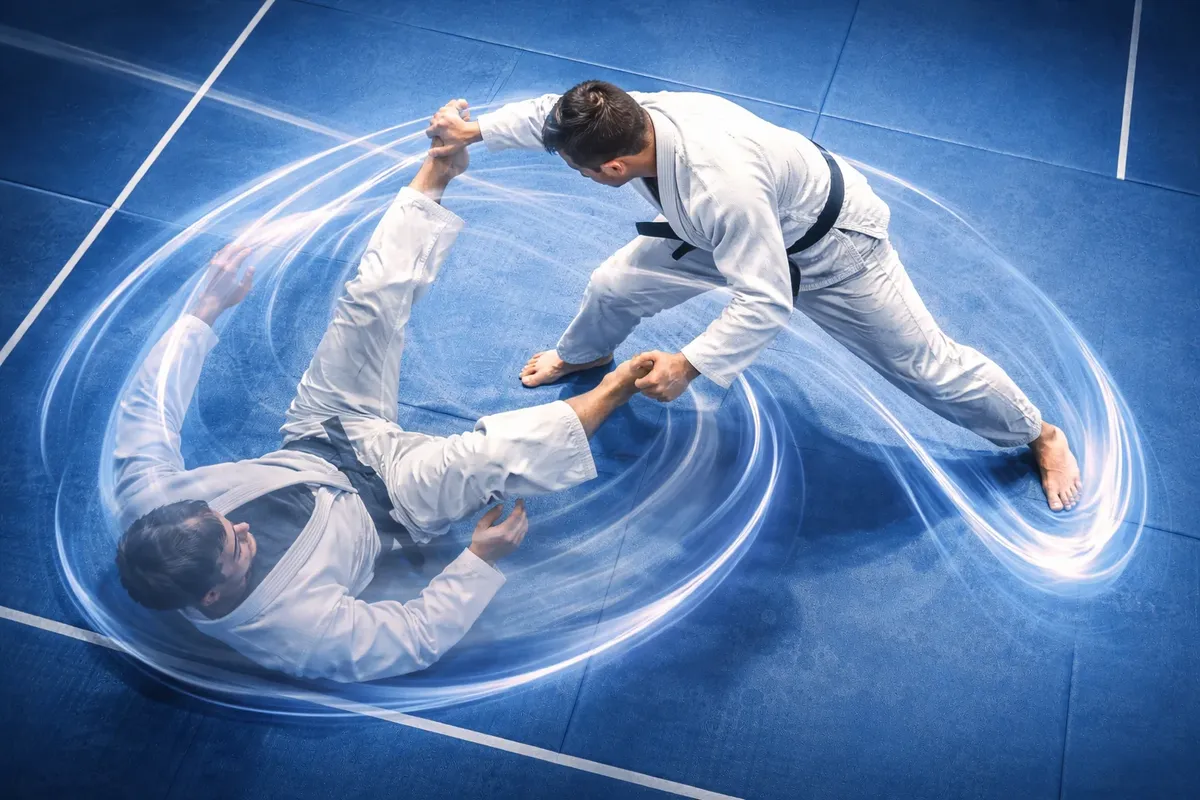
No-Gi vs Gi BJJ: Key Differences, Benefits, and Which to Train
A complete comparison of gi and no-gi Brazilian Jiu-Jitsu covering techniques, rules, gear, training benefits, and how to choose the right style for your goals.
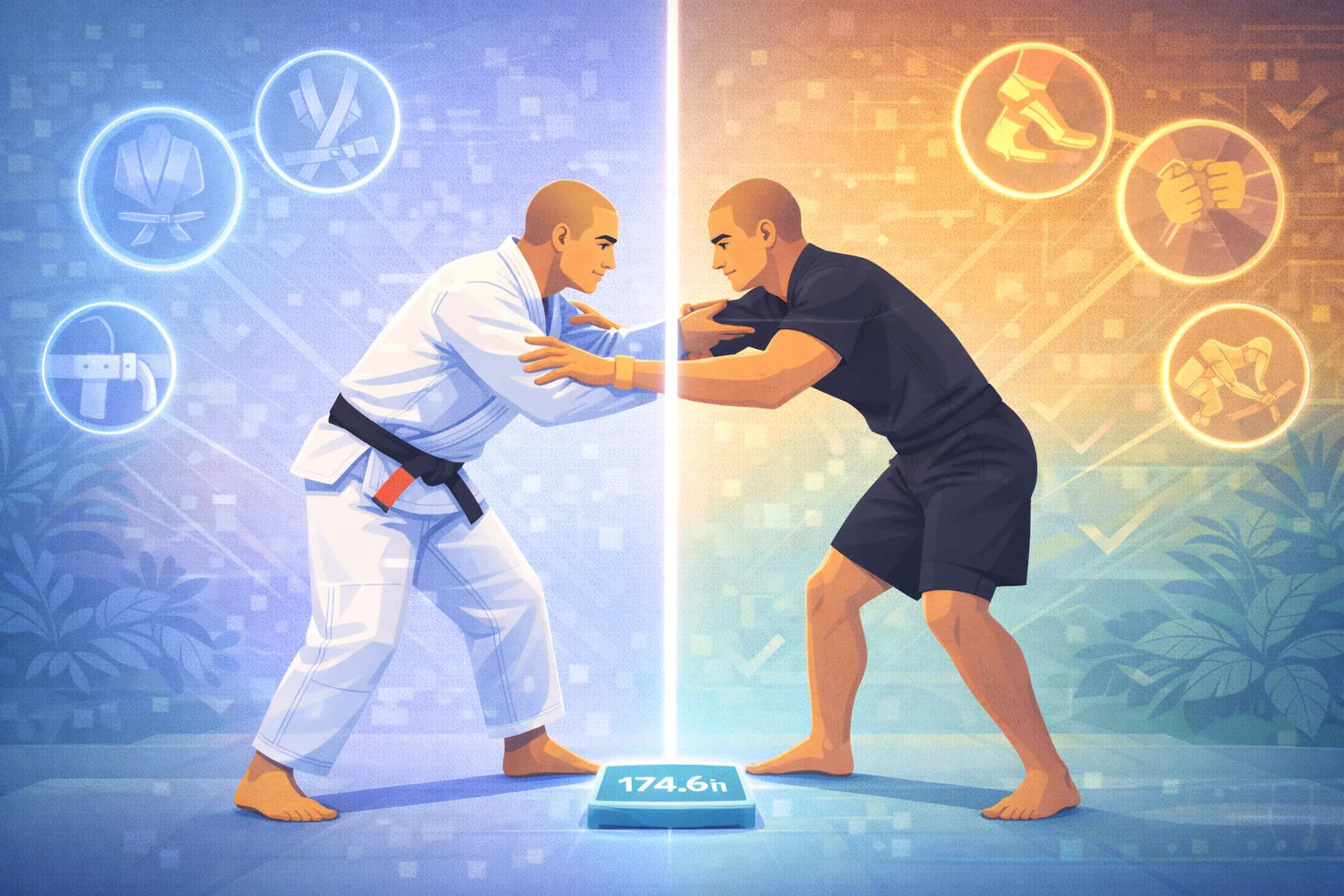
The Great Debate: Gi vs No-Gi
If you spend any time in a BJJ academy, you will hear this question within your first week: should you train gi or no-gi? It is one of the oldest and most passionate debates in Brazilian Jiu-Jitsu, and it is often one of the first decisions new practitioners face when they walk through the door and see the schedule split between "Gi" and "No-Gi" classes.
The short answer is that both styles are legitimate expressions of the same art, and neither is inherently superior. But the differences between gi and no-gi BJJ are real and meaningful. They affect the grips you use, the techniques you favor, the pace of your rolls, and even the way you think about grappling. Understanding those differences will help you train smarter, compete better, and get more out of every session on the mat.
This guide breaks down everything you need to know about no-gi vs gi BJJ: what sets them apart, what each style offers, and how to decide which one deserves your time. If you are brand new to the art, our complete beginner's guide to BJJ is a great place to start before diving into the gi vs no-gi question.
What Is Gi BJJ?
Gi BJJ is the traditional form of Brazilian Jiu-Jitsu. Practitioners wear a gi (also called a kimono), which consists of a heavy cotton jacket, reinforced pants, and a belt that indicates rank. The gi has been a part of jiu-jitsu since its roots in Japanese judo, and it remains the standard uniform for IBJJF competition and most academy curricula worldwide.
The gi is not just a uniform. It is a tool. The thick fabric of the jacket and pants provides dozens of gripping options that do not exist in no-gi training. You can grab the collar, the sleeves, the lapels, and the pant legs. Your opponent can do the same to you. These grips slow the pace of the match, create friction, and open up an entire category of techniques built around the fabric itself.
Collar chokes, lapel guards, spider guard, lasso guard, worm guard, and the bow-and-arrow choke all depend on the gi. Strip away the uniform and these techniques vanish entirely. That is what makes gi BJJ a distinct discipline: the kimono shapes the entire tactical landscape.
A Brief History
The Gracie family developed BJJ wearing the gi, inheriting the tradition from Mitsuyo Maeda and Japanese judo. For decades, gi training was simply "jiu-jitsu." The gi enforced a methodical, technical game that rewarded patience, precise grip placement, and positional control over athletic scrambles. That philosophy remains at the heart of gi-centric training today.
What Is No-Gi BJJ?
No-gi BJJ is Brazilian Jiu-Jitsu practiced without the traditional kimono. Instead, practitioners wear a rash guard (a tight-fitting athletic shirt) and grappling shorts or spats. There is no fabric to grab, no collar to choke with, and no lapel to wrap around an opponent's limbs.
Without the gi, everything changes. Grips shift from fabric-based controls to body-based controls: underhooks, overhooks, wrist grabs, collar ties, and body locks replace sleeve and collar grips. Sweat makes everything slippery. Positions that felt secure in the gi can evaporate in seconds when there is nothing to hold onto.
The result is a faster, more dynamic, and more scramble-heavy style of grappling. No-gi rewards speed, athleticism, and the ability to chain attacks in rapid sequence. It also places a much greater emphasis on wrestling, since takedowns become more important when you cannot simply pull guard with a collar grip.
No-gi has exploded in popularity over the past decade, driven by the growth of ADCC (the Abu Dhabi Combat Club submission grappling world championships), the influence of MMA, and high-profile athletes like Gordon Ryan who have elevated no-gi to a spectator sport in its own right.
Did You Know: The ADCC World Championships, widely considered the most prestigious no-gi grappling event, has been running since 1998. But no-gi's mainstream breakthrough came in the late 2010s with the rise of submission-only formats and the dominance of leg lock specialists who changed what competitive grappling looked like.
Track every roll — log sessions and techniques for free
Key Differences Between Gi and No-Gi BJJ
The gi vs no-gi distinction goes far deeper than wardrobe. Here are the core differences that shape each style.
Grips and Control
This is the single biggest difference between gi and no-gi, and it drives almost every other distinction.
In the gi, you have an enormous menu of grip options. Collar grips control the head and posture. Sleeve grips manage the arms and set up sweeps. Pant grips steer the legs. Lapel grips can be woven into elaborate guard systems. The friction from the fabric makes these grips sticky and hard to break, which means positional control is easier to establish and maintain.
In no-gi, you are limited to the body itself. The primary controls are:
- Underhooks (the most important no-gi grip for controlling distance and angle)
- Overhooks (for trapping the arm and setting up submissions)
- Wrist control (for managing distance from guard)
- Collar ties (neck control for wrestling exchanges)
- Body locks (for passing and takedowns)
Because sweat makes the body slippery, no-gi grips are inherently less secure. You must constantly re-establish control, which leads to more transitions, more scrambles, and a faster overall pace.
Pace and Style
Gi BJJ tends to be slower and more methodical. The grips allow you to control the pace, slow your opponent down, and work through a positional sequence step by step. High-level gi matches often feature extended grip-fighting exchanges where both players battle for hand position before any significant action occurs.
No-gi is typically faster and more chaotic. Without friction to slow things down, transitions happen quickly. A sweep attempt that fails in no-gi often leads to an immediate scramble, a re-guard, or an opportunistic submission attempt. The pace rewards cardio, reaction time, and the ability to think several moves ahead.
Key Takeaway
Gi BJJ rewards patience and methodical control. No-gi BJJ rewards speed and adaptability. Neither approach is better — they develop different qualities that make you a more complete grappler when combined.
Techniques: What Works Differently
While the fundamental positions (mount, side control, back, guard) exist in both styles, the techniques that work from those positions diverge significantly.
Techniques that are gi-specific:
- Collar chokes (cross-collar, loop choke, Ezekiel with sleeve)
- Bow-and-arrow choke
- Spider guard, lasso guard, worm guard
- Lapel-based guards and sweeps
- Baseball bat choke
- Brabo/D'Arce using the gi fabric for grip
Techniques that thrive in no-gi:
- Guillotine choke variations (becoming harder to defend without collar frames)
- Leg locks, especially heel hooks from ashi garami
- Body lock passing
- Front headlock series (anaconda, D'Arce, Japanese necktie)
- Wrestling takedowns (single leg, double leg, body lock)
- Butterfly guard and X-guard (where overhook and underhook control replaces gi grips)
Techniques that work in both, with adjustments:
- Armbar (grip setup differs)
- Triangle choke (control hand differs)
- Rear naked choke (the universal submission)
- Kimura and Americana
- Guard passing concepts (though specific grips and passes vary greatly)
The modern leg lock game is perhaps the clearest example of how no-gi has influenced the broader art. Heel hooks, once considered fringe, are now central to competitive no-gi and are increasingly appearing in gi competition as well. If you want to understand heel hook defense, it is essential regardless of which style you train.
Inside Heel Hook — No-Gi Specialty
Lachlan Giles demonstrates the inside heel hook, a submission that has become synonymous with modern no-gi competition and leg lock systems.
Demonstrated by Lachlan Giles — ADCC Medalist
Inside Heel Hook: Setup and Safety by Lachlan Giles — ADCC Medalist, PhD
Rules and Scoring
Gi and no-gi competitions operate under different rulesets, and those rules reinforce the stylistic differences between the two.
IBJJF Gi Rules:
- Points for takedowns, sweeps, passes, mount, back control, and knee-on-belly
- Advantages for near-successful attempts
- Restrictive leg lock rules: straight ankle lock only at white through purple belt; toe holds at brown; heel hooks at brown/black belt (and only in no-gi divisions)
- Knee reaping is illegal at most belt levels
- Stalling penalties exist but are loosely enforced
- Matches tend to be tactical and points-driven
For a deep dive into the complete ruleset, see our IBJJF rules guide.
ADCC / No-Gi Rules:
- Points for takedowns, sweeps, passes, mount, back mount, and knee-on-belly (but only after a point-free first half of the match)
- No advantages
- All leg locks legal, including heel hooks and knee reaping
- Negative points for guard pulling (discouraging passivity)
- Emphasis on submission finishes
- Matches tend to be more aggressive and submission-oriented
Submission-only formats (like Who's Number One) eliminate points entirely, rewarding only the finish and producing a different tactical dynamic where stalling carries no benefit.
Gear and Equipment
For gi training, you need:
- A BJJ gi (jacket, pants, and belt) that meets competition standards
- The gi typically costs between $60 and $200+ depending on brand and quality
- Most practitioners own at least two gis for rotation during the training week
- The gi must meet specific size, fit, and material requirements for competition
For no-gi training, you need:
- A rash guard (short or long sleeve)
- Grappling shorts or spats (compression tights)
- No-gi gear is generally cheaper, lighter, and easier to wash
- No standardized uniform requirements beyond covering the body appropriately
Pro Tip: If you are just starting out and want to try both, invest in a quality gi and a rash guard. Many gyms allow you to wear a rash guard under your gi, so the rash guard does double duty. You can always add more gear as you figure out which style you prefer.
Benefits of Training in the Gi
The gi offers unique training advantages that are difficult to replicate in no-gi.
Technical Precision
The gi slows things down. That slower pace forces you to be precise with your technique, because your opponent can grab and control you with the same grips you are using. Sloppy movements get punished. If your armbar escape has a gap, your opponent will grab your sleeve and shut it down. If your pass leaves your collar exposed, you are getting choked.
This built-in accountability makes the gi an exceptional teaching tool, especially for beginners. You cannot rely on speed or slipperiness to escape bad positions. You have to learn the mechanics.
Grip Strength and Endurance
Training in the gi develops extraordinary grip strength. The constant gripping, re-gripping, and grip breaking builds forearm endurance that translates directly to no-gi and other sports. Many no-gi specialists who started in the gi credit their grip-fighting ability as a lasting advantage.
Defensive Awareness
Because the gi gives your opponent so many attacking options, you develop a heightened awareness of defensive details. Keeping your elbows tight, protecting your collar, and managing sleeve grips become second nature. This defensive sensitivity carries over to no-gi, where you will naturally protect your neck and limbs even without the gi-specific threats.
Positional Discipline
The friction of the gi makes it harder to scramble out of bad positions. You cannot simply slip out of mount when your opponent has collar and sleeve control. This forces you to learn proper escapes, develop patience under pressure, and respect the positional hierarchy. The principle of "position before submission" is strongest in the gi.
Spider Guard Over Under Pass
A gi-specific guard passing technique that uses sleeve and pant grips to control distance and shut down the spider guard, one of the most common open guards in gi competition.
Demonstrated by Otavio Sousa — 4x IBJJF World Champion
Spider Guard Over Under Pass by Otavio Sousa — 4x IBJJF World Champion
Benefits of Training No-Gi
No-gi develops a different set of attributes that are equally valuable for your overall grappling development.
Speed and Reaction Time
Without the gi to slow things down, no-gi training forces you to react quickly. Transitions happen faster, scrambles are more frequent, and you have to make split-second decisions about whether to attack, defend, or re-establish position. This develops your timing and instincts in ways that slower gi training cannot replicate.
Applicability to Self-Defense and MMA
In a real-world self-defense scenario, your attacker probably is not wearing a gi. No-gi training teaches you to control an opponent using the body itself — underhooks, head control, body locks — which are directly applicable when there is no fabric to grab. This same logic makes no-gi the standard training format for MMA fighters.
Wrestling Integration
No-gi BJJ places a premium on takedowns and stand-up grappling in ways that gi BJJ does not. The absence of collar grips makes guard pulling less effective and wrestling more necessary. Training no-gi naturally develops your takedown game, sprawl defense, and ability to chain standing grappling into ground work.
The Growing Competition Scene
The no-gi competition circuit has never been larger. ADCC, Who's Number One (WNO), the Craig Jones Invitational, and the IBJJF No-Gi Worlds all offer major competitive opportunities. Prize money in no-gi events has increased significantly, attracting elite talent and making no-gi competition a viable career path for top athletes. If you are interested in competing, no-gi offers a vibrant and growing scene.
Key Takeaway
No-gi training builds speed, wrestling ability, and real-world grappling skills. The competition scene is booming, and the techniques developed in no-gi — particularly leg locks and wrestling-based passing — have reshaped the entire art of jiu-jitsu.
The 2026 Landscape: How Gi and No-Gi Are Evolving
The gi vs no-gi debate looked very different ten years ago. Today, the line between the two styles is blurring in exciting ways.
Neo Jiu-Jitsu and the Hybrid Approach
The term "neo jiu-jitsu" describes the modern evolution of BJJ that integrates techniques from wrestling, judo, sambo, and both gi and no-gi competition into a unified system. Rather than treating gi and no-gi as separate disciplines, neo jiu-jitsu practitioners view them as two expressions of the same art, borrowing freely from both.
This hybrid approach is visible at the highest levels of competition. Gi competitors are incorporating ashi garami leg entanglements and heel hooks into their games — attacks that were once considered exclusively no-gi territory. No-gi athletes are using De La Riva guard concepts, berimbolo entries, and positional control strategies that originated in gi training.
The result is a richer, more dynamic form of grappling that rewards versatility above all else.
The Leg Lock Crossover
The leg lock revolution began in no-gi, but it has crossed into the gi permanently. IBJJF now permits heel hooks at brown and black belt in no-gi divisions, acknowledging what the no-gi world demonstrated: leg attacks are a fundamental part of grappling, not a niche specialization. Saddle positions, 50/50 entries, and systematic leg entanglement sequences are now standard curriculum at forward-thinking academies regardless of the training format.
ADCC's Influence on the Culture
ADCC has become the aspirational event for many competitive grapplers, and its influence extends beyond the no-gi world. The ADCC ruleset — with its emphasis on submission finishes, guard pull penalties, and permissive leg lock rules — has shaped the way an entire generation thinks about jiu-jitsu. Athletes like Gordon Ryan, who dominates no-gi with systematic pressure passing and methodical submissions, have proven that technical precision (a traditionally gi-associated quality) is just as important in no-gi as explosive athleticism.
Cross-Training as the New Normal
The best competitors in 2026 train both styles. Athletes like Kaynan Duarte and Cole Abate have demonstrated that excelling in no-gi does not require abandoning the gi. Mikey Musumeci, known for his gi brilliance, has applied his precision and grip-fighting intelligence to no-gi with remarkable success. Ffion Davies dominates in the gi with dynamic berimbolo-based attacks while maintaining no-gi competitiveness.
The days of being a "gi person" or a "no-gi person" are fading. The modern standard is fluency in both.
The Evolution of Guard Passing: Guard passing strategies have diverged between gi and no-gi, but both styles are borrowing from each other. Gi passers are adopting body lock passing concepts from no-gi, while no-gi passers are using collar tie and pant grip strategies adapted from the kimono game. Watch how the approaches differ in the videos below.
Leg Drag Guard Pass by Ricardo Almeida — ADCC Champion, UFC Veteran
Which Should You Train?
The answer depends on your goals. Here is a framework to help you decide.
If Your Goal Is Competition
Train both, but lean toward the style you plan to compete in. If you want to compete at ADCC or in no-gi submission grappling events, prioritize no-gi training with gi work as a supplement for positional discipline. If you want to compete at IBJJF gi events, prioritize gi training but develop your no-gi skills to sharpen your reactions and wrestling.
If Your Goal Is Self-Defense
Lean toward no-gi. In a real confrontation, you will not be fighting someone in a kimono. No-gi teaches you to control another person's body using clinch work, underhooks, and body locks — skills that transfer directly. That said, gi training builds defensive awareness and technical precision that will serve you in any situation.
If Your Goal Is MMA
Train no-gi primarily. MMA grappling happens in shorts and gloves, making no-gi the directly applicable training format. Wrestling takedowns, guillotines, front headlock attacks, and cage-specific grappling all come from no-gi. Many successful MMA fighters supplement with gi training for the defensive benefits, but no-gi is the foundation.
If Your Goal Is Fitness
Train whichever one you enjoy more. Both styles provide an exceptional workout. Gi training tends to be more grip-intensive and isometric (think slow, grinding strength). No-gi tends to demand more cardio, explosiveness, and full-body athleticism. The best workout is the one you actually show up for consistently.
If Your Goal Is Fun
Try both and see what resonates. Some people love the chess-like pace of gi. Others thrive on the fast scrambles of no-gi. Your body type, personality, and learning style will all influence which format feels more natural. There is no wrong answer here.
Key Takeaway
There is no universally correct answer to "gi or no-gi." Your training goals, competitive ambitions, and personal preferences should guide your decision. But if you have the opportunity to train both, you will develop a more complete game than someone who only trains one.
Why the Best Answer Is Both
The strongest argument in the gi vs no-gi debate is that the best grapplers in the world do not pick one — they train both and let each style sharpen the other.
Gi training improves your no-gi game by:
- Building defensive sensitivity (protecting your neck and limbs becomes automatic)
- Developing grip strength that gives you an advantage in no-gi hand fighting
- Forcing technical precision that survives the transition to a faster pace
- Teaching patience and positional discipline under pressure
No-gi training improves your gi game by:
- Sharpening your reactions and transition speed
- Developing wrestling and takedown skills you can use in the gi
- Teaching you to control with hip pressure and body mechanics instead of relying on grips
- Exposing you to the modern leg lock game that is now part of gi competition
The cross-training effect is not theoretical. It is the reason elite academies schedule both gi and no-gi classes throughout the week, and it is why the top competitors move fluidly between formats.
If your schedule only allows two or three sessions per week, consider splitting your time between both styles rather than committing entirely to one. Even one no-gi session per week will meaningfully improve your gi game, and vice versa.
Training Tips for Each Style
Gi-Specific Tips
1. Master grip fighting early. In the gi, the match is won and lost in the grips. Learn to establish your preferred grips, strip your opponent's grips, and recognize what each grip configuration means for the position. Grip fighting is a skill unto itself, and it deserves dedicated practice time.
2. Learn the collar choke series. Cross-collar chokes, loop chokes, and the bow-and-arrow choke are high-percentage attacks that define gi BJJ. Developing a dangerous collar choke game forces your opponent to respect your grips, which opens up sweeps and other attacks.
3. Explore gi-specific guards. Spider guard, lasso guard, and De La Riva guard all rely on gi grips for control. These guards offer powerful sweeping and submission options that do not exist in no-gi. Developing at least one gi-specific guard gives you a tactical dimension that pure no-gi players lack.
4. Practice slow, deliberate rolling. The gi rewards patience. Dedicate some of your rolling time to slow, technical sparring where you focus on maintaining control and executing clean technique rather than winning exchanges through speed or strength.
5. Drill your escapes under pressure. The gi makes bad positions harder to escape. Drill mount escapes, side control escapes, and back escapes against an opponent who is actively using gi grips to maintain control. This builds the technical and mental toughness that carries over to every aspect of your game.
No-Gi-Specific Tips
1. Develop your wrestling. No-gi without wrestling is incomplete. At minimum, learn a solid double leg, a single leg, and effective sprawl defense. Attend wrestling-focused classes if your gym offers them. The ability to take the fight to the ground on your terms is a massive advantage.
2. Study the leg lock game. Heel hooks, knee bars, and toe holds are central to modern no-gi. You do not need to be a leg lock specialist, but you need to understand the positions (ashi garami, 50/50, saddle), the attacks, and — critically — the defenses. Ignoring leg locks in no-gi is like ignoring collar chokes in the gi.
3. Prioritize underhook battles. The underhook is the most important grip in no-gi. Winning the underhook battle from half guard, from butterfly guard, and from standing dictates who controls the exchange. Train to win and maintain underhooks as a fundamental skill.
4. Build your scramble game. No-gi scrambles happen faster than gi scrambles. Practice transitioning between positions at speed, chaining attacks together, and capitalizing on the micro-opportunities that arise when neither player has established control.
5. Condition your cardio. No-gi is more physically demanding due to the faster pace and constant grip re-establishment. Add dedicated cardio work — whether through extra rolling rounds, solo drills, or supplemental conditioning — to ensure your technique does not degrade when you are tired.
Safety Note: Heel hooks and other rotational leg attacks can cause serious injury if applied too quickly or without control. Always communicate with your training partners about leg lock rules before rolling, tap early to any leg entanglement you are unsure about, and never crank a submission in training. The goal is to learn, not to win a training round at the cost of your partner's knee.
Start Tracking Your Training in Both Styles
Whether you train gi, no-gi, or both, tracking your sessions gives you data that reveals patterns you would never notice otherwise. Which style are you spending more time on? Where are your submissions coming from in each format? Is your guard passing better in the gi or no-gi? Are you drilling leg locks enough to keep up with your no-gi competition?
These are the kinds of questions that separate intentional training from just showing up.
Ready to see how your gi and no-gi games compare? Download Rollbook to track your sessions by training type, monitor your technique progress in both styles, and discover where your game shines. Start your free trial today.
Oss!