Gordon Ryan's Systematic Guard Passing: A Complete Breakdown
An in-depth analysis of Gordon Ryan's body lock passing system, pressure methodology, and the systematic approach that made him the greatest no-gi grappler of all time.
The King's Blueprint: Why Gordon Ryan's Passing Changes Everything
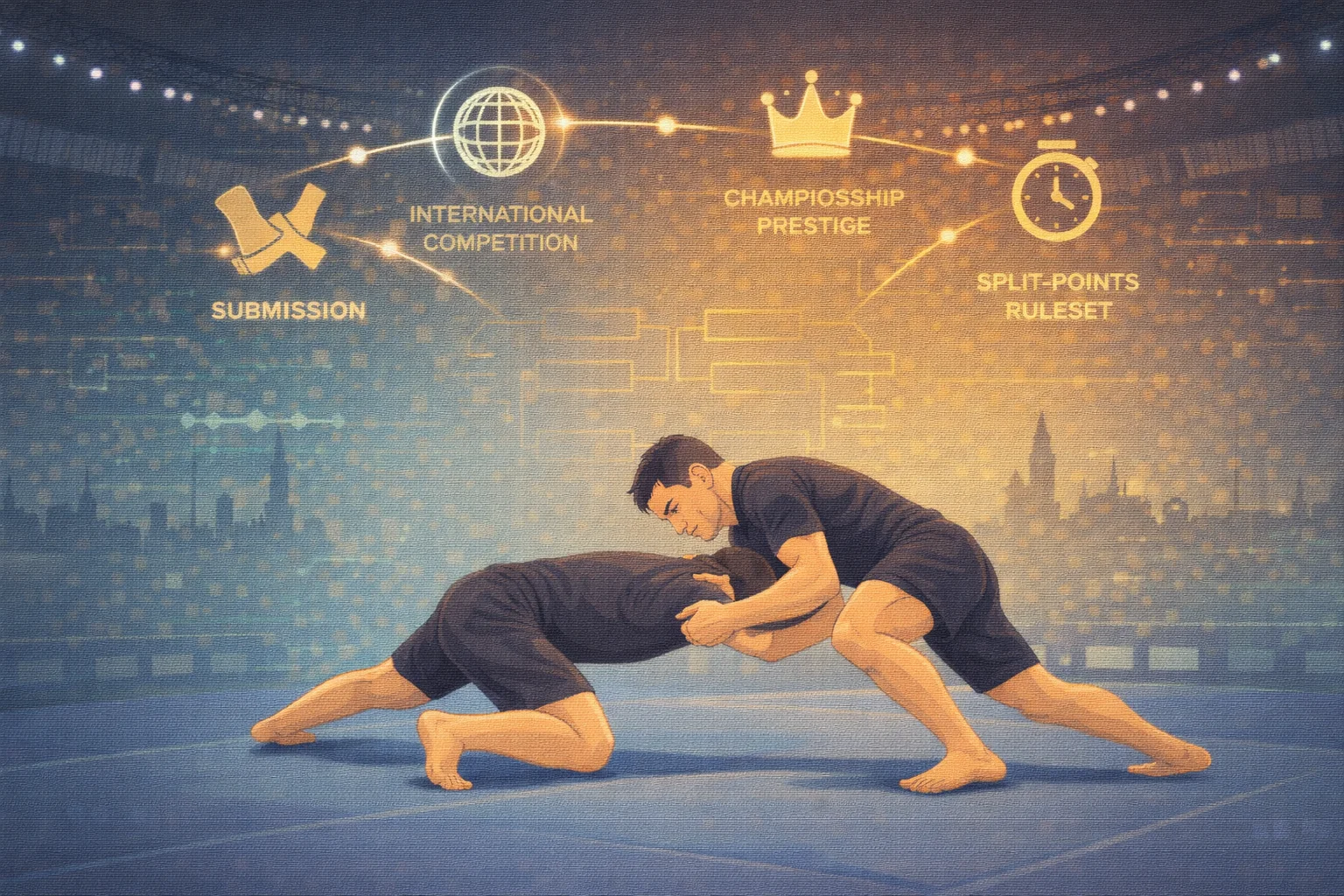
Gordon Ryan is, by virtually every measure, the greatest no-gi grappler in history. Seven ADCC championship titles. Absolute division titles. Superfight victories over the sport's biggest names. An undefeated streak in major no-gi competition that defies belief. But if you ask seasoned coaches and competitors what truly separates Ryan from the field, the answer is rarely about a single submission or a moment of athletic brilliance. It is his guard passing.
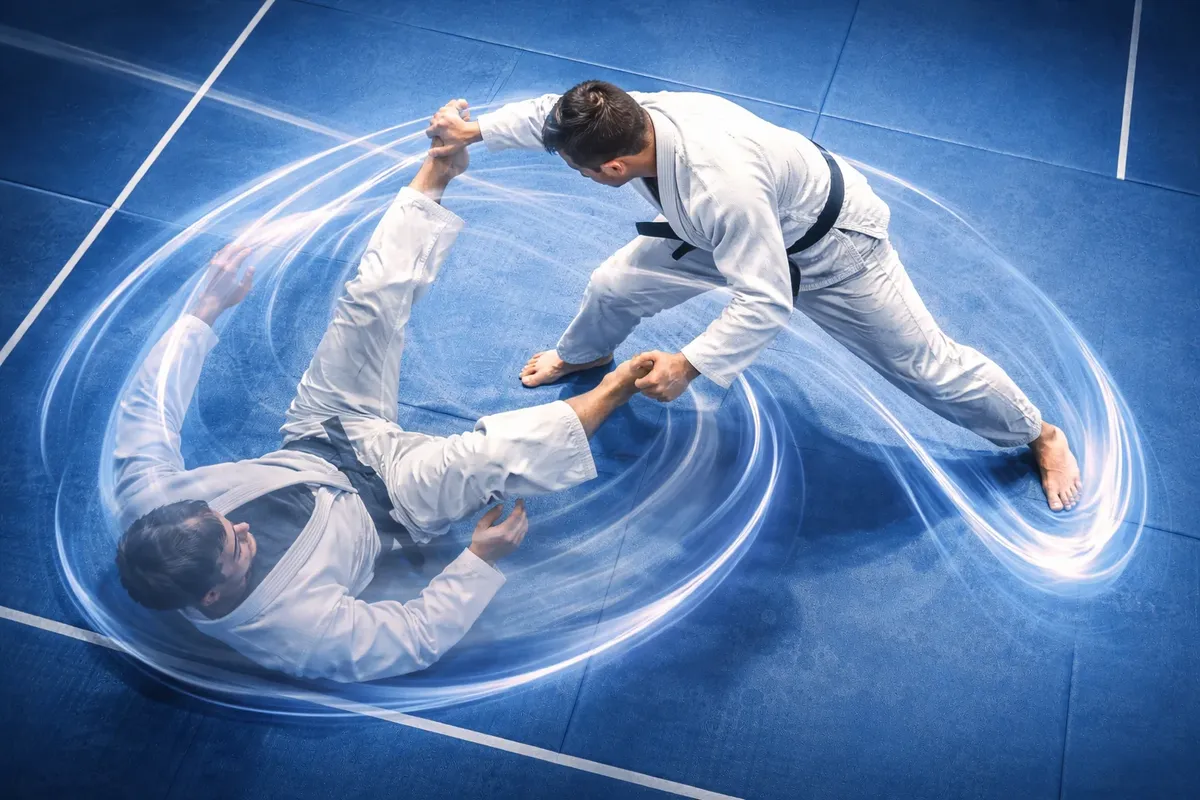
Ryan's top game is a machine -- methodical, suffocating, and nearly impossible to stop once it gets rolling. While other elite grapplers rely on scrambles, explosiveness, or a single killer pass, Ryan applies a systematic framework that funnels every opponent's reaction into a predetermined outcome. Whether you are a white belt learning to navigate open guard or a brown belt looking to sharpen your competition game, understanding this system will fundamentally reshape how you think about passing.
This breakdown covers the philosophy, the mechanics, and the competition application of Gordon Ryan's guard passing system. If you are still building your foundational passing knowledge, start with our guard passing fundamentals guide before diving into the advanced concepts here.
The Philosophy: Positions Before Submissions
Gordon Ryan's approach is built on a concept drilled into him by his coach, John Danaher: positions before submissions. In the Danaher system, every roll follows a roadmap. You do not hunt for the finish. You follow a sequence -- enter the guard, pass systematically, establish a dominant top position, and then apply submissions as a natural byproduct of positional control.
This philosophy is the backbone of Ryan's dominance. He never rushes. He never forces. He does not care if the pass takes thirty seconds or five minutes. The outcome is the same: methodical, systematic dismantling of the guard, followed by crushing top pressure that leads to either a submission or a decisive points victory.
Key Takeaway
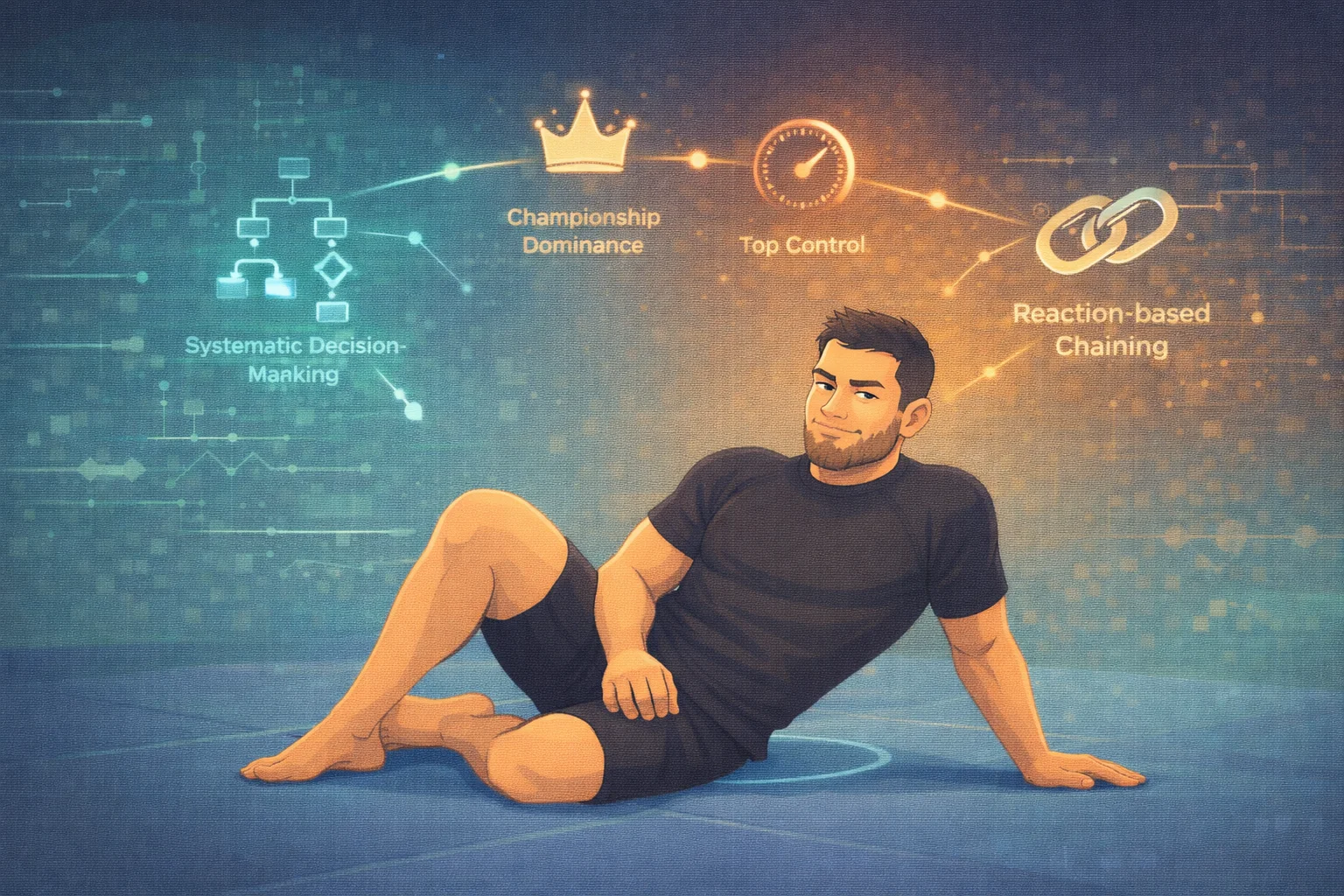
Gordon Ryan's passing success stems from treating guard passing as a system, not a collection of isolated techniques. Every pass attempt feeds into the next one. Every defensive reaction from the opponent triggers a pre-planned response. The system works because it removes decision-making under pressure and replaces it with trained pattern recognition.
As Ryan himself has explained, the goal is to create an "if-then" flowchart: if the opponent does X, you respond with Y. If they do Z, you have a counter for that too. There is no scrambling, no guessing -- just a series of interconnected decisions that always lead to the pass. This same systematic thinking applies in no-gi grappling broadly, where the absence of grips forces grapplers to rely on body mechanics and frameworks rather than collar-and-sleeve control.
Phase 1: Loose Passes -- Disruption and Entry
Ryan's system does not start with heavy pressure. It starts with movement.
The first phase uses what are called loose passes -- fast, footwork-based techniques designed to disrupt the guard and force reactions. These passes are not necessarily intended to complete the pass on their own. Instead, they function as entries into the tighter, pressure-based phases that follow.
The Torreando (Bullfighter) Pass
The torreando is Ryan's primary loose pass. He controls both of the opponent's legs (typically at the knees or ankles), then redirects them to one side while his hips move to the other. The goal is not always to blow past the guard immediately. Instead, it forces the opponent to address the passing threat, which opens up transitions to tighter positions.
Ryan uses the torreando in combination with what Danaher calls J-Point Camping. The J-Point (short for "Jeopardy Point") is the moment when the passer's body clears the opponent's hip line. At this point, the guard player is in jeopardy -- if they do not react, they will be passed. Ryan uses the torreando to reach the J-Point and then holds position there, forcing the opponent to burn energy recovering while he stays relatively relaxed.
J-Point Camping
The J-Point (Jeopardy Point) is the position where your body has cleared your opponent's hip line and they are in immediate danger of being passed. Instead of rushing to complete the pass, "camp" at this point -- maintaining pressure while your opponent exhausts energy trying to recover their guard. You stay relaxed; they work frantically. This asymmetry of effort is the engine of Gordon Ryan's passing system.
Demonstrated by Gordon Ryan
Float Passing and the High Step
Alongside the torreando, Ryan uses float passing (staying light on his feet, shifting laterally to avoid guard hooks) and the high step -- stepping one foot to the opponent's far hip, straddling it while maintaining a shoulder post and grip control on the opposite leg. The high step creates a powerful passing angle. If the opponent recovers, Ryan drops back to the J-Point camping position and tries again, losing nothing.
This is the beauty of Phase 1: it is low-risk, high-reward. Failed loose passes do not leave you in danger. They leave you right back at the starting point, ready to try again, while your opponent has burned energy defending.
Gordon Ryan's SIMPLE way to be an ADVANCED guard passer -- Limi BJJ breaks down how Ryan uses simple concepts to pass at the highest level.
Track every roll — log sessions and techniques for free
Phase 2: The Body Lock System
When loose passes create an opening -- or when the opponent's guard begins to collapse -- Ryan transitions into Phase 2: the body lock. This is the centerpiece of his entire passing game and the technique most closely associated with his dominance.
What Is the Body Lock Pass?
The body lock pass involves securing a tight over-under grip around the opponent's waist and one arm, locking your hands together (typically a Gable grip or S-grip). This pins their upper body in place while your hips remain free to manipulate their legs. It is a pressure pass in its purest form: once the body lock is secured, the opponent's options shrink dramatically.
Ryan has described three primary methods to complete the body lock pass: stuffing, shelving, or splitting the legs. Which one he uses depends entirely on how the opponent reacts.
Step-by-Step: The Body Lock Sequence
Step 1: Entry via Initial Pressure
Ryan typically enters the body lock from a torreando or knee slice attempt. As loose passing disrupts the guard, he transitions into the body lock by dropping his chest onto the opponent and securing the over-under grip. The key detail: his head goes to the crossface side (ear against the opponent's cheek), creating a wedge that prevents them from turning into him.
Step 2: Flatten the Back
With the body lock secured, Ryan drives the opponent's knees away from their chest, forcing their back flat on the mat. A flat back is a dead back -- the opponent cannot shrimp, cannot turn, cannot create angles. Ryan uses head pressure and the crossface to control the shoulders while his locked arms pin the torso.
Step 3: Free the Knee and Pass
With the opponent's back flat, Ryan works to extract his trapped knee. He does this through bridging, using a knee lever, or trail leg positioning toward the far hip. The specific method depends on how the opponent's legs are configured, but the principle is constant: free the knee, advance to side control, near hip, or mount.
Step 4: Chain to Half Guard If Needed
If the opponent manages to recover their legs and entangle one of Ryan's legs, he does not fight it. Instead, he settles into chest-to-chest half guard -- which is actually Phase 3 of his system and a position of dominance, not a setback.
Body Lock Pass -- The Core System
Secure an over-under grip around the opponent's waist and one arm. Drive their back flat with crossface pressure. Free your trapped knee via bridge, lever, or trail leg positioning. Complete the pass to side control, near hip, or mount. If the opponent recovers half guard, settle into chest-to-chest and transition to Phase 3.
Demonstrated by Gordon Ryan
Gordon Ryan explains his guard passing system in detail -- covering the body lock, pressure methodology, and reaction-based chaining that defines his top game.
Why the Body Lock Dominates Modern No-Gi
The body lock pass has become the gold standard in no-gi competition for several reasons:
- It neutralizes leg locks. By locking your body against the opponent's torso, you prevent them from creating the distance needed for leg lock entries. Modern guards like K-Guard, Reverse De La Riva, and 50/50 all require the guard player to control distance -- the body lock eliminates that distance entirely.
- It does not require grips. In no-gi, you cannot grab the collar or pants. The body lock uses a grip around the body itself, making it grip-independent.
- It rewards patience over athleticism. You do not need to be faster or more explosive than your opponent. You need to be heavier, tighter, and more methodical.
Did You Know: The body lock pass has become one of the most commonly used passing techniques in modern no-gi competition, with its prevalence surging at recent ADCC events. Ryan's influence on the meta is undeniable -- grapplers across all weight classes have adopted his body lock system as their primary passing strategy, often using his exact grip configurations and pressure sequences.
Phase 3: Chest-to-Chest Half Guard -- The Hub Position
Most grapplers think of half guard as a neutral or even disadvantageous position for the top player. Ryan treats it as a weapon.
When an opponent desperately hooks Ryan's leg to prevent a complete pass, Ryan does not waste energy fighting to free his leg. Instead, he drops into chest-to-chest half guard, pinning the opponent's head and shoulders to the mat with crushing top pressure. He secures a far-side underhook, trapping the opponent's head and arm, and uses his free hand to control the near-side hip.
From here, Ryan has multiple passing options:
- Hip switch pass: Switching his hips through the separated knees to free his trapped leg and complete the pass.
- Smash pass to cross-shoulder post: Driving his knee through to the opposite side while maintaining chest pressure.
- Knee pommel: Using his knees to wedge apart the opponent's legs while keeping heavy upper-body pressure.
- Back take: If the opponent turns away to escape the pressure, Ryan takes the back -- which is equally devastating.
This is what Danaher and Ryan call the "trilemma" -- the opponent faces three losing options, and any defensive choice leads to either the pass or a submission.
Chest-to-Chest Half Guard Control
When the opponent hooks your leg to prevent the pass, drop your weight chest-to-chest. Secure the far-side underhook to trap their head and arm. Pin their shoulders flat with crossface pressure. From here, hip switch through their knees, smash pass to the opposite side, or take the back when they turn away. The opponent faces a trilemma with no good answers.
Demonstrated by Gordon Ryan
The If-Then Flowchart: Reaction-Based Chaining
What makes Ryan's system truly elite is not any single technique -- it is how every technique connects to every other technique in a logical chain. Ryan does not think in terms of individual passes. He thinks in decision trees.
The Passing Trilemma
Danaher formalized this as the Passing Trilemma, a framework built around three interconnected options:
- J-Point Camping -- Get to the J-Point via torreando or float passing and hold position, forcing the opponent to burn energy recovering. If they fail to recover, complete the pass.
- High Step -- Step to the opponent's far hip with your inside foot, straddling it while maintaining post and grip control. Step over with your inside leg to pass. If they recover, return to J-Point camping.
- Chest-to-Chest Half Guard -- If the opponent hooks your far leg, drop into half guard with dominant upper-body pressure. Pass from here via hip switch, smash, or knee pommel.
Every opponent reaction feeds into one of these three positions. There is no dead end. If a torreando fails, you camp at the J-Point. If the J-Point is recovered, you high step. If the high step gets caught, you settle into half guard. From half guard, you pass or take the back. The loop is endless and always moving forward.
Training Tip: When drilling Ryan's system, start by mastering the transitions between phases rather than perfecting individual techniques. Spend entire rounds flowing from torreando to J-Point camping to high step to half guard to pass. The value is in the connections, not the individual moves. This is what separates a "collection of passes" from a "passing system."
Pressure Passing Principles: Light Hips, Heavy Chest
Ryan's pressure methodology follows a counterintuitive principle: light hips, heavy chest and hands.
Most grapplers think pressure passing means being heavy everywhere. Ryan disaggregates his weight. During the initial loose passing phase, his hips and legs stay light and mobile -- allowing him to pummel past the opponent's legs, change angles quickly, and react to guard retention attempts. His hands and upper body, meanwhile, apply constant downward force on the opponent's legs or torso.
Once past the legs, the equation flips. Now his chest becomes a crushing weight on the opponent's upper body while his hips stay relatively loose to continue manipulating the opponent's legs out of any remaining guard hooks.
This principle -- mobile where you need to move, heavy where you need to pin -- is what allows Ryan to combine the speed of loose passing with the grinding effectiveness of pressure passing in a single integrated system.
The Forearm Split
One of Ryan's signature micro-details is what practitioners call the forearm split or J-Point forearm position. When approaching the guard, Ryan places his forearm inside the opponent's far hip, using it as a wedge to split their legs apart. This forearm position serves multiple purposes:
- It prevents the opponent from closing their guard around Ryan's waist
- It creates an inside position advantage
- It transitions naturally into the body lock or the high step
- It directs pressure into the opponent's hip, flattening them
Light Hips, Heavy Chest Principle
During loose passing, keep your hips mobile and your hands heavy on the opponent's legs. During tight passing and consolidation, keep your chest crushing and your hips loose enough to manipulate legs. Never be heavy everywhere at once -- it slows you down. Never be light everywhere at once -- you lose control. Distribute your weight strategically based on what phase of the pass you are in.
Demonstrated by Gordon Ryan
Competition Application: ADCC Dominance
Ryan's system is not theoretical. It has been proven under the brightest lights in grappling, over and over again.
ADCC Championship Record
Gordon Ryan's ADCC record is staggering:
- 2017 ADCC: Gold at -88 kg, defeating Dillon Danis, Romulo Barral, Xande Ribeiro, and Keenan Cornelius
- 2019 ADCC: Gold at -99 kg (defeating Ben Hodgkinson, Tim Spriggs, Lucas Barbosa, and Vinicius Ferreira) AND gold in the Absolute division (defeating Pedro Marinho, Garry Tonon, Lachlan Giles, and Marcus "Buchecha" Almeida)
- 2022 ADCC: Gold at +99 kg (defeating Heikki Jussila, Victor Hugo, Roosevelt Sousa, and Nick Rodriguez) plus a superfight victory over Andre Galvao via rear naked choke
- 2024 ADCC: Superfight victories over Felipe Pena (2-0 on points) and Yuri Simoes (21-0 on points)
Ryan became the first grappler in ADCC history to win gold in three different weight classes. He also holds the record for the fastest submission in ADCC history -- an outside heel hook on Roosevelt Sousa in just 11 seconds.
How Passing Won the Titles
Watch Ryan's ADCC matches closely and a pattern emerges. He rarely shoots for takedowns. He pulls guard, sweeps to top, and then systematically passes. Or he engages from top position and methodically dismantles the guard using the exact system described above.
Against Andre Galvao in the 2022 superfight, Ryan spent the opening minutes working loose passes before locking in the body lock. Once the body lock was secured, the pass was inevitable. From side control, he transitioned to mount, then to the back, finishing with a rear naked choke. The entire sequence was a textbook application of the Danaher positional hierarchy: pass the guard, advance position, submit.
Against Nick Rodriguez in the 2022 +99 kg final, Ryan used his chest-to-chest half guard to neutralize Rodriguez's explosive athleticism. Rodriguez could not use his speed advantage because Ryan's pressure kept him pinned flat on his back, burning energy with every attempted escape.
Study Drill: Watch three of Gordon Ryan's ADCC matches and chart each passing sequence. Note the phase (loose pass, body lock, half guard), the opponent's reaction, and Ryan's response. You will see the same if-then patterns repeat across every match. This exercise trains your eye to recognize systematic passing in real time -- a skill that directly transfers to your own game.
A detailed analysis of Gordon Ryan's guard passing masterclass -- breaking down the patterns, principles, and decision-making that make his system so effective.
How to Develop Your Own Passing System
Gordon Ryan's system works because it is a system -- not because every individual technique is unique. The torreando, the knee slice, the body lock, and the half guard pass all existed before Ryan. What Ryan and Danaher did was connect them into an integrated framework where every technique supports every other technique.
You can apply the same approach to your own game, regardless of your belt level or body type.
Step 1: Choose Your Entry Passes
Pick two or three loose passes that suit your body type and athleticism. If you are tall and lanky, torreando and leg drags may work well. If you are stocky and strong, knee slices and over-under passes might be a better fit. If you are just starting out, our beginner's guide to BJJ covers the fundamentals you need first.
Step 2: Develop a Tight Pass
Choose one tight, pressure-based pass to serve as your primary finishing technique. The body lock is the gold standard in no-gi, but the over-under pass and the smash pass are equally viable. The key is selecting one and drilling it relentlessly.
Step 3: Build Your Half Guard Game
Half guard is inevitable. No matter how good your passing is, you will end up in half guard regularly. Develop a dominant chest-to-chest half guard position with at least two passing options and a back-take option.
Step 4: Map Your Chains
This is where the system comes together. For each of your entry passes, map out what happens when it fails:
- If pass A fails because the opponent recovers guard, what do you do? (Probably try pass B.)
- If pass B fails because the opponent hooks your leg, what do you do? (Settle into half guard.)
- From half guard, what are your options? (Hip switch, smash, back take.)
Write these chains down. Drill them in sequence. Practice flowing from one to the next without stopping.
Step 5: Train the Decision Points
Positional sparring is the most effective way to internalize your passing system. Start in open guard with the sole objective of passing. When you get stuck, note where and why. Adjust your chains accordingly. Over time, the if-then decisions become automatic.
Key Takeaway
You do not need Gordon Ryan's physical attributes to use his methodology. The power of systematic passing is that it replaces athleticism and improvisation with structured decision-making. Choose your passes, connect them into chains based on opponent reactions, and drill the transitions until they become automatic. This approach works at every level and for every body type.
Defending Against the System
Understanding Ryan's system also makes you better at defending against it. If you know the flowchart, you know where to disrupt it. Key defensive principles include:
- Frame early. Do not wait until the body lock is secured. Frame on the biceps and hips during the loose passing phase.
- Stay on your side. Ryan's system depends on flattening your back. Staying on your side, even partially, preserves your guard recovery options.
- Address the crossface. The crossface is the control point that enables everything else. If you can swim under the crossface or strip it, the entire system stalls.
- Do not concede half guard passively. If you must hook his leg, immediately fight for an underhook and get to your side. Flat half guard is where Ryan is most dangerous.
For practitioners facing aggressive body lock passers, understanding heel hook defense is equally important, since many passers will transition to leg attacks if the guard player extends too aggressively.
Ready to build a systematic passing game? Download Rollbook to track your guard passing attempts, analyze which passes work best for your body type, and develop your own if-then chains. Start your free trial today.
Oss!