John Danaher's Leg Lock System: Understanding the Revolution
A comprehensive analysis of John Danaher's systematic approach to leg locks, the ashi garami framework, and the coaching philosophy that created the Danaher Death Squad and changed submission grappling forever.
The Architect of Modern Leg Locks
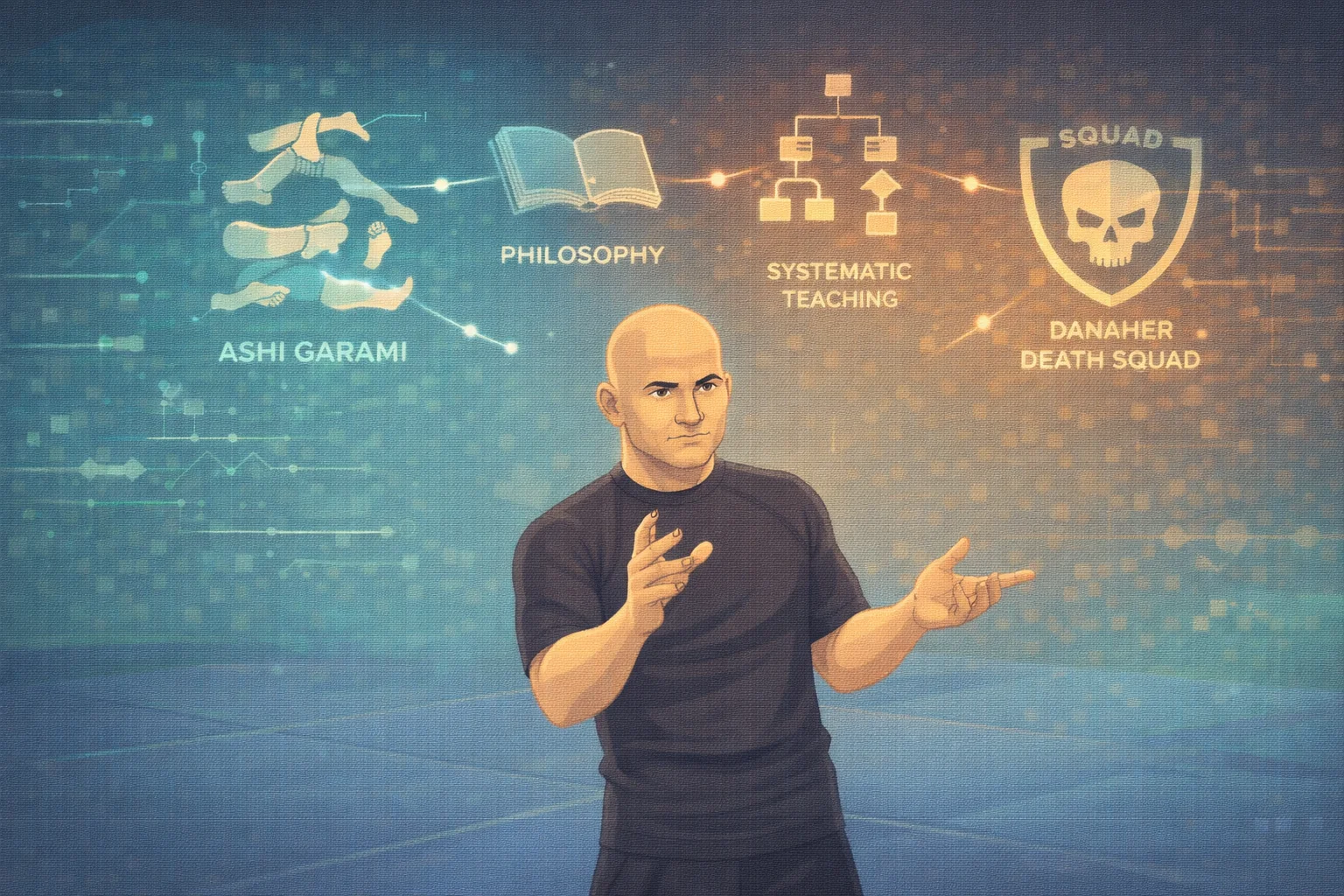
In the history of Brazilian Jiu-Jitsu, few individuals have reshaped the competitive landscape as profoundly as John Danaher. While he never competed at the highest levels himself, Danaher did something arguably more difficult -- he took the sprawling, chaotic world of leg locks and distilled it into a coherent, teachable system that his students used to dominate submission grappling for nearly a decade. Where others saw a collection of isolated attacks, Danaher saw an interconnected framework of positions, transitions, and breaking mechanics. The result was nothing short of a revolution, one that forced the entire grappling world to reckon with a part of the body that traditional jiu-jitsu had long neglected.
What makes Danaher's contribution unique is not that he invented leg locks -- they existed long before him in sambo, catch wrestling, and scattered pockets of BJJ. His genius was in systematization: organizing these techniques into a logical hierarchy, identifying the critical control points, and then training a cadre of athletes who would prove the system's effectiveness on the world's biggest stages. Understanding how he did it offers lessons not just for aspiring leg lockers, but for anyone seeking to build a truly systematic approach to grappling.
From Philosophy to Jiu-Jitsu
John Danaher was born on April 2, 1967, in Washington, D.C., but grew up in New Zealand, where he developed the intellectual curiosity that would later define his coaching career. He earned bachelor's and master's degrees in philosophy from the University of Auckland before making his way to Columbia University in New York City, where he pursued a Ph.D. in philosophy. Though he did not complete the doctorate, that academic background -- rigorous logic, epistemology, the dissection of complex ideas into first principles -- would become the foundation of everything he later built in martial arts.
While in New York, Danaher began training under Renzo Gracie, one of the most respected members of the Gracie family and a decorated competitor in his own right. Danaher proved to be an exceptional student, and despite a chronic knee injury that limited his ability to compete, his analytical mind made him an extraordinary instructor. He rose to become one of the primary instructors at the Renzo Gracie Academy, a role he held for decades. Where most coaches taught through demonstration and repetition, Danaher taught through explanation and logic. He could articulate why a technique worked in biomechanical and strategic terms, not merely show how to perform it. This distinction would prove transformative.
The Ashi Garami System
The cornerstone of Danaher's leg lock revolution is his classification of ashi garami -- the Japanese term for leg entanglement positions. Before Danaher's framework, leg locks in BJJ were largely taught as opportunistic attacks: you stumbled into a position and grabbed whatever was available. Danaher rejected this approach entirely. He identified and codified the major leg entanglement positions into a taxonomy that his students could study, drill, and deploy with precision.
The primary positions in the Danaher system include inside ashi garami (the fundamental control position with a triangled leg configuration on the inside line), outside ashi (controlling from the outside hip line), cross ashi (an entanglement that crosses the opponent's center line for powerful breaking angles), 50/50 (a symmetrical entanglement used both offensively and defensively), and the 411 -- also known as inside sankaku or the saddle -- which Danaher considered the most dominant leg control position in all of grappling. Each position offered different submission options, different levels of control, and different transition pathways.
The Ashi Garami Framework
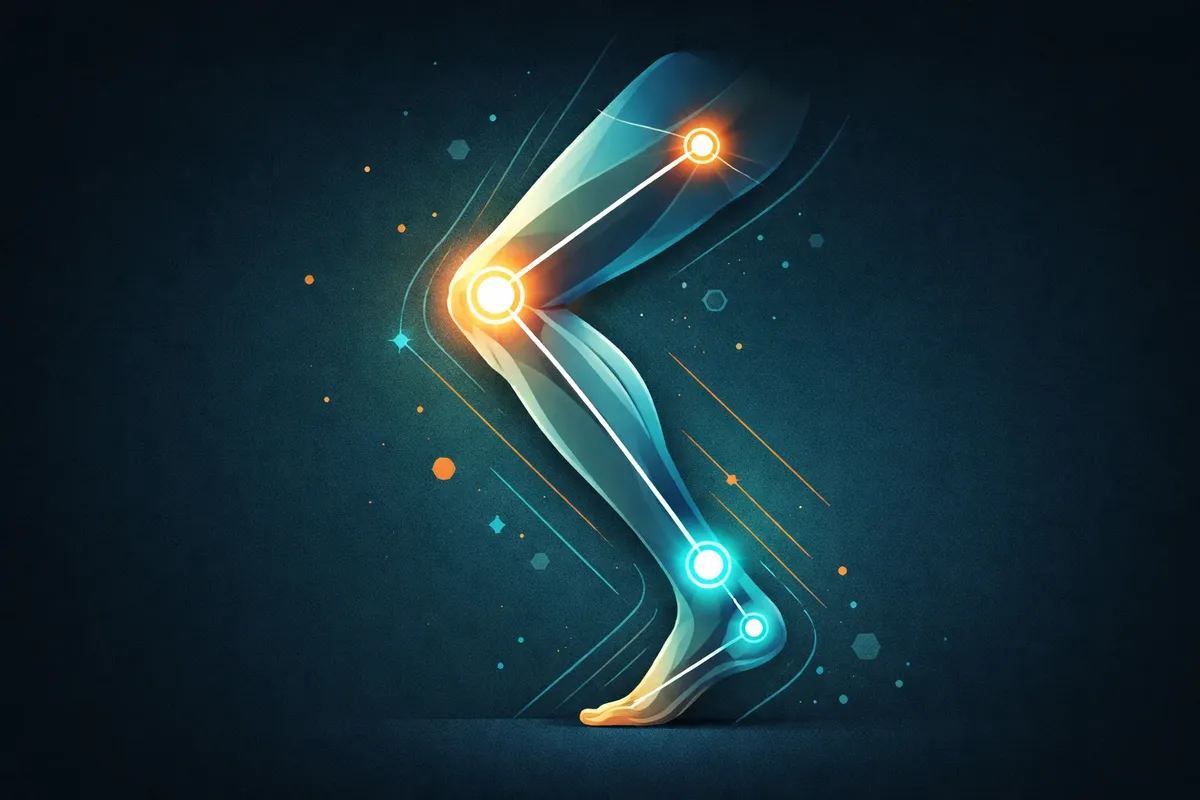
Danaher's positional hierarchy for leg entanglements prioritizes hip control before knee-line attacks. The system flows from inside ashi garami (entry-level control) through cross ashi and outside ashi, culminating in the 411/saddle as the highest-control position. Each transition follows a logical if-then decision tree based on the opponent's defensive reactions.
Demonstrated by John Danaher
The key insight that underpins the entire system is deceptively simple: control the hip line before attacking the knee line. In Danaher's framework, the legs are understood as a kinetic chain. If you control your opponent's hips -- preventing them from turning, extracting, or squaring up -- then their knee becomes vulnerable to rotational attacks. Skip the hip control, and even a perfectly applied heel hook can be escaped. This principle gave the system its structural integrity and separated it from the grab-and-crank approach that had characterized most leg lock instruction before.
Track every roll — log sessions and techniques for free
The Inside Heel Hook: The Signature Weapon
Of all the submissions available from the ashi garami positions, Danaher zeroed in on the inside heel hook as the highest-percentage finishing weapon. His reasoning was characteristically analytical. The inside heel hook attacks the knee joint through rotation, specifically by rotating the foot inward while the knee is held in place by the entanglement. Because the knee's ligaments -- particularly the ACL and MCL -- are not designed to resist this rotational force, the submission is devastatingly effective and, when applied with intent, dangerous.
Inside Heel Hook Mechanics
The inside heel hook works by trapping the opponent's heel in the crook of the wrist while using a figure-four grip to generate inward rotation on the foot. The ashi garami entanglement immobilizes the hip and knee, creating a fixed point against which the rotational force acts. The breaking pressure targets the lateral collateral ligaments and the ACL. Danaher emphasizes a slow, controlled squeeze rather than a violent crank -- control yields taps, violence yields injuries.
Demonstrated by John Danaher
Danaher's emphasis on the inside heel hook was strategic as well as mechanical. At the time his system was being developed, most grapplers had minimal heel hook defense because IBJJF rules had banned the technique at most belt levels for decades. This created what Danaher recognized as an asymmetric advantage -- his students were drilling attacks that their opponents had never learned to defend. The competitive results spoke for themselves.
The Danaher Death Squad
A system is only as good as its practitioners, and Danaher assembled one of the most fearsome teams in grappling history. Training in the legendary "blue basement" of the Renzo Gracie Academy in Manhattan, the Danaher Death Squad (DDS) became synonymous with submission grappling dominance. The core members -- Gordon Ryan, Garry Tonon, Eddie Cummings, and Nicky Ryan -- each brought different physical attributes and competitive temperaments, but all shared the same systematic foundation.
Eddie Cummings was the first DDS member to gain widespread attention, demolishing opponents at early Eddie Bravo Invitational (EBI) events with a seemingly endless barrage of heel hooks. His precision and calm under pressure demonstrated that the system was not about athleticism or size -- it was about knowledge and positional control. Garry Tonon, already an accomplished ADCC medalist, added leg locks to his already explosive game and became nearly impossible to stop in submission-only formats before transitioning to professional MMA. Nicky Ryan, Gordon's younger brother, showed that the system could be learned from a remarkably young age.
And then there was Gordon Ryan, who would go on to become the most dominant no-gi grappler in history. Ryan took Danaher's system and expanded it far beyond leg locks, developing passing, back attacks, and mount systems that were equally systematic. His six ADCC gold medals -- spanning 2017, 2019, 2022, and 2024 -- are the ultimate testament to the depth of Danaher's coaching methodology. Craig Jones, who trained with the DDS before later co-founding B-Team Jiu-Jitsu, further demonstrated the system's transferability.
John Danaher discusses grappling, jiu-jitsu, ADCC, and his coaching philosophy on Lex Fridman Podcast #328.
Teaching Methodology: Systems Over Techniques
Perhaps Danaher's most important contribution to jiu-jitsu is not any specific technique but rather his teaching methodology. Traditional BJJ instruction often operates as a "technique of the day" model -- the coach shows a move, students drill it, and over time practitioners accumulate a collection of techniques that may or may not fit together coherently. Danaher rejected this model in favor of what he calls systems-based instruction.
In Danaher's framework, every technique exists within a larger system, and every system is built around if-then decision trees. If the opponent defends a heel hook by straightening their leg, you transition to a kneebar. If they try to clear your legs to escape ashi garami, you reguard to a different entanglement. If they roll, you follow and maintain control. Nothing is isolated; every action has a counter, and every counter has a re-counter, all mapped out in advance. This approach transforms grappling from a collection of memorized moves into a dynamic, responsive strategic framework.
Training Tip: When studying Danaher's methodology, resist the urge to jump straight to submissions. Instead, spend weeks just learning to enter and maintain the ashi garami positions. Danaher himself emphasizes that positional mastery must precede submission attempts -- the control is what makes the finish available.
His Enter The System instructional series, released through BJJ Fanatics, brought this methodology to a global audience and revolutionized online BJJ instruction. Each volume -- covering leg locks, back attacks, front headlocks, guard passing, and more -- was not a highlight reel of techniques but a comprehensive course that built concepts from first principles. His later work under the New Wave Jiu Jitsu banner continued this approach with even greater depth and production quality.
Key Takeaway
Danaher's core insight is that jiu-jitsu should be taught as interconnected systems, not isolated techniques. A system provides a complete map of positions, transitions, attacks, and contingencies for a given area of grappling. When you learn a system, you gain the ability to respond to any defensive reaction -- not just the one your training partner happens to use in drilling.
Competition Results: Proof of Concept
The ultimate validation of any martial arts system is competition, and the numbers produced by Danaher's students are staggering. Gordon Ryan alone accounts for six ADCC gold medals across multiple weight classes, the absolute division, and the superfight, with dominant victories in 2017, 2019, 2022, and 2024. His submission rate in major professional events hovers near 90%, a figure that is virtually unprecedented at the highest levels of the sport.
Garry Tonon earned an ADCC bronze medal and was widely considered one of the most exciting grapplers of his generation before transitioning to MMA, where he compiled a notable professional record. Eddie Cummings was a dominant force in the early EBI events, finishing the vast majority of his matches by heel hook -- often within the first few minutes. Nicky Ryan competed at the ADCC World Championships at just 16 years old -- the youngest competitor in the event's history -- and won multiple ADCC trials medals as a teenager, demonstrating the system's effectiveness regardless of age or physical maturity.
Did You Know: Between 2015 and 2022, Danaher Death Squad members compiled a submission rate exceeding 70% at major no-gi events, with Gordon Ryan alone capturing six ADCC World Championship gold medals across multiple weight classes and the absolute division. In many of those victories, the finishing submission was a heel hook executed from one of Danaher's codified ashi garami positions.
The collective impact of these results forced a paradigm shift across competitive grappling. Teams that had previously ignored or dismissed leg locks were suddenly investing heavily in both offensive leg lock development and defensive leg lock awareness. The asymmetric advantage that Danaher had identified began to close -- but by the time it did, his students had already expanded their systems to encompass every dimension of the grappling game.
How to Study Danaher's Approach
For practitioners looking to understand and incorporate Danaher's methodology, the good news is that more instructional material is available now than at any point in history. A strong starting point is the series of long-form interviews Danaher has given on podcasts, particularly his appearances on the Lex Fridman Podcast, which are freely available and cover not just technique but his broader philosophy of learning, teaching, and mastery.
John Danaher shares his philosophy on the path to mastery in jiu-jitsu and martial arts on the Lex Fridman Podcast.
From there, the Enter The System and New Wave Jiu Jitsu instructional series provide the most comprehensive technical breakdowns. However, studying Danaher's work effectively requires a different approach than watching a typical instructional. Rather than trying to memorize individual techniques, focus on understanding the positional hierarchy -- learn which positions offer the most control, which transitions connect them, and which submissions are available from each. Build your understanding from the ground up, starting with basic ashi garami maintenance before progressing to attacks.
Study Drill: Pick one ashi garami position (start with inside ashi) and spend an entire week just entering and holding it during sparring. Do not attempt any submissions. Focus on maintaining hip control against progressively harder resistance. Once you can reliably hold the position for 30 seconds against a resisting partner, begin adding the first submission -- the inside heel hook -- with slow, controlled pressure. This mirrors Danaher's own training progression.
The Broader Impact: How Danaher Changed BJJ
To fully appreciate Danaher's impact, it helps to understand the state of leg locks in jiu-jitsu before his system gained prominence. For decades, leg locks occupied a peculiar position in BJJ culture. The IBJJF, the sport's most influential governing body, banned heel hooks entirely and restricted most other leg attacks to brown and black belt divisions. The cultural message was clear: leg locks were "cheap," unsophisticated, and somehow beneath the art's emphasis on positional dominance and upper-body submissions.
Danaher's system -- and, more importantly, his students' competitive dominance -- shattered this narrative entirely. By demonstrating that leg locks could be applied with the same precision, control, and systematic depth as any other aspect of grappling, Danaher forced a reckoning within the broader BJJ community. The IBJJF eventually expanded the legal leg lock techniques at various belt levels, a tacit acknowledgment that the old restrictions had created an artificial gap in practitioners' knowledge. The no-gi revolution, which Danaher's work both reflected and accelerated, reshaped competitive priorities across the sport.
It is worth noting that Danaher's approach stands in interesting contrast to practitioners like Roger Gracie, who achieved legendary status by perfecting the most fundamental, traditional techniques in jiu-jitsu. Both Danaher and Roger Gracie share a commitment to depth over breadth and to systematic mastery over flashy improvisation -- they simply applied that commitment to different areas of the art. Together, they represent two complementary visions of what it means to pursue excellence in grappling.
Danaher's influence now extends far beyond his original squad. His teaching methodology -- systems-based, principle-driven, organized around decision trees -- has been adopted by coaches and academies worldwide. The vocabulary he introduced (ashi garami, the 411, inside and outside positions) has become the standard language of modern leg lock instruction. Whether or not practitioners realize it, virtually every leg lock class taught today is built on foundations that Danaher laid.
Build Your Own Systematic Game
John Danaher proved that the most powerful force in martial arts is not athleticism, aggression, or even natural talent -- it is systematic thinking. By bringing a philosopher's rigor to the study of leg locks, he transformed an underexplored corner of jiu-jitsu into the sport's most dynamic and feared weapon system. His legacy is not just a collection of techniques but a way of thinking about grappling that empowers any practitioner willing to invest the time.
Ready to build your own systematic approach to training? Download Rollbook to track your sessions, log the techniques you are drilling, and measure your progress as you develop your game -- whether that game is built on leg locks, passing, or anything in between.
Oss!